A situationship is a romantic or sexual relationship that lacks clear commitment, definition, or future expectations. It exists in a gray area, often characterized by inconsistent communication and emotional ambiguity, making it more than a casual fling but less than a committed partnership.
Key Takeaways

- A situationship is a romantic or sexual relationship that lacks clear commitment, definition, or future expectations.
- It often blurs the lines between friendship and a committed romantic partnership.
- Key characteristics include inconsistent communication, emotional ambiguity, and a lack of future planning.
- Situationships can arise from various factors, including fear of commitment, convenience, or a desire for low-pressure connection.
- Navigating a situationship requires self-awareness, open communication (even if limited), and realistic expectations.

What is a Situationship? A Quick Definition

In today's dating landscape, terms like 'situationship' have emerged to describe a common, yet often undefined, type of romantic connection. Unlike traditional relationships with clear labels and future goals, a situationship operates in a nebulous space, offering companionship and intimacy without the explicit promises of a committed partnership. In our experience with modern dating trends, understanding this dynamic is crucial for navigating expectations and emotions.
The Core Characteristics of a Situationship

A situationship is defined by its ambiguity and lack of defined commitment. While it involves emotional and/or physical intimacy, there's an unspoken understanding or explicit agreement that it doesn't fit the mold of a traditional boyfriend/girlfriend relationship. This can be both liberating and confusing for those involved.
These relationships often exist on a spectrum, and their characteristics can vary significantly from one pairing to another. However, several common threads weave through most situationships, creating a unique dynamic that sets them apart from more defined romantic connections. Recognizing these traits is the first step to understanding if you're in one.

Inconsistent Communication and Availability
A hallmark of a situationship is the unpredictable nature of communication. Unlike committed partners who often prioritize regular check-ins, individuals in a situationship might communicate sporadically. Messages can go unanswered for extended periods, and plans might be made last minute or canceled without much explanation.
This inconsistency can leave one or both parties feeling uncertain about their standing. For instance, you might wonder, 'Is he thinking about me?' or 'Why haven't we talked in days?' This mirrors the uncertainty one might feel before establishing a strong connection, similar to the early stages of dating where you're testing the waters. We've observed that this lack of consistent dialogue often prevents deeper emotional bonds from forming.
Emotional Ambiguity and Lack of Future Planning
The 'what are we?' conversation is often conspicuously absent or avoided in a situationship. There's a general lack of discussion about the future, exclusivity, or what the relationship might evolve into. This emotional ambiguity can be a source of anxiety and confusion.
When we've analyzed these dynamics, it's clear that the absence of future-oriented conversations — like planning a holiday together or discussing long-term compatibility — is a significant indicator. This contrasts sharply with committed relationships where future planning is a natural progression. For example, asking your best friend's boyfriend about his five-year plan would be a standard question in a more defined relationship, but rarely arises in a situationship.
Blurred Lines Between Friendship and Romance
Situationships often feel like a blend of friendship and romance, but without the security of either. You might share intimate moments and deep conversations, but the relationship lacks the labels and commitment that solidify romantic partnerships. Similarly, the casual ease of friendship might be present, but the romantic or sexual component adds a layer of complexity.
This can be particularly tricky when trying to understand boundaries. Are you dating? Are you just friends with benefits? The lack of a clear answer can be exhausting. It's like trying to play couples conversation games without knowing if you're actually a couple. Our research indicates that this liminal space can lead to feelings of being 'stuck' or unfulfilled.
Lack of Exclusivity (Often Unspoken)
While not always explicitly stated, exclusivity is rarely a given in a situationship. Both parties may be free to see other people, or the topic of exclusivity is simply never brought up, leaving it in a state of unspoken permission. This can be a deliberate choice to maintain freedom or a consequence of the relationship's undefined nature.
This can be a point of contention if one person develops stronger feelings or desires a more exclusive connection. The absence of a clear agreement on exclusivity can lead to misunderstandings and hurt feelings. It's a far cry from asking questions for new boyfriend, where exclusivity is often assumed.
Why Do Situationships Happen? Exploring the Motivations
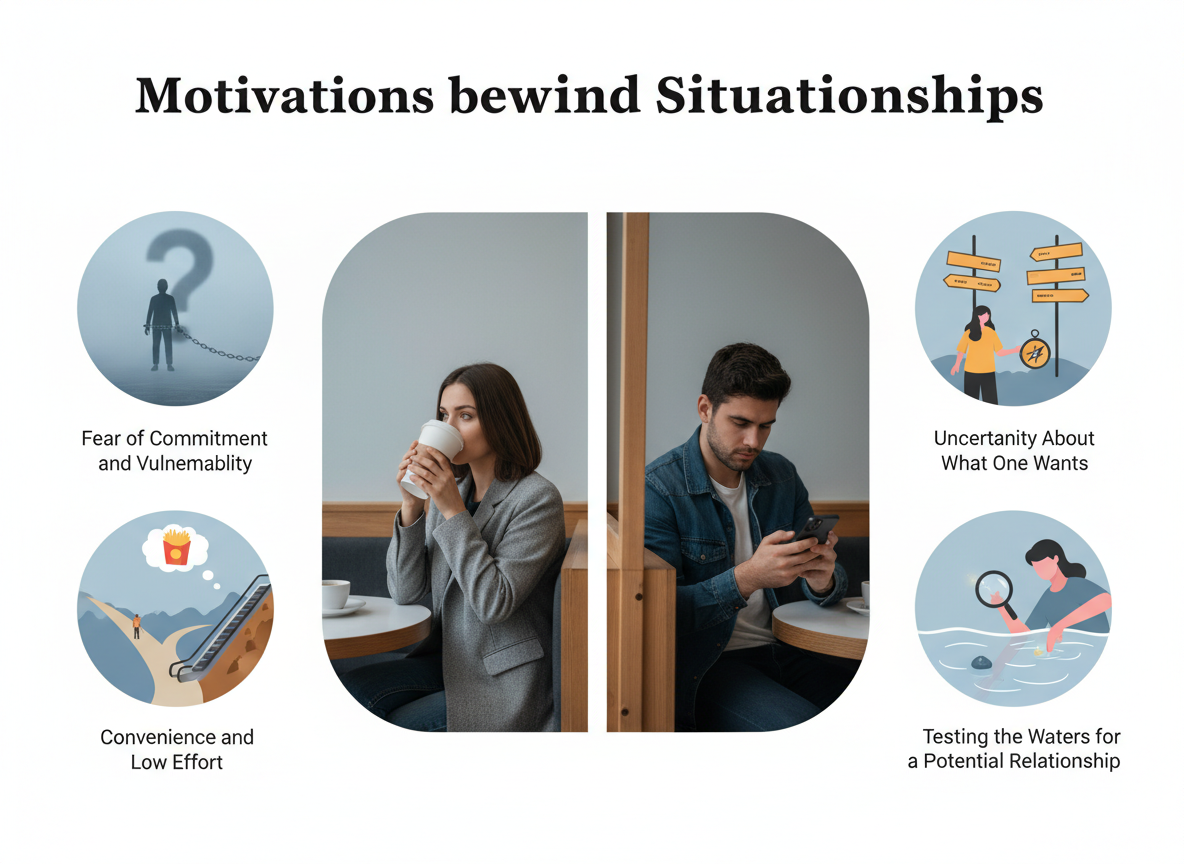
Situationships arise for a variety of reasons, often stemming from a desire for connection without the pressures of traditional commitment. These motivations can be conscious or subconscious, individual or relational.
Understanding the 'why' behind these connections can provide valuable insight for those involved. It's not always about a lack of interest in commitment, but rather a complex interplay of personal needs, past experiences, and current life circumstances. As the dating landscape evolves, so do the ways people connect, and situationships represent one such evolution. Research from the Kinsey Institute (2023) suggests that modern dating preferences are becoming more fluid and less bound by traditional norms.

Fear of Commitment and Vulnerability
For many, a situationship offers a safe haven from the perceived risks of deep commitment. Past heartbreaks, fear of intimacy, or a general apprehension about being vulnerable can lead individuals to opt for connections that remain on a surface level, thus avoiding potential pain.
This aligns with concepts discussed in The Power of Habit by Charles Duhigg, where breaking old patterns (like fear-driven avoidance) requires conscious effort and often a gradual shift. In relationships, this can mean slowly building trust and comfort rather than diving headfirst into a committed partnership. When we observe these patterns, it's clear that the desire to protect oneself often outweighs the desire for deep connection.
Convenience and Low Effort
In busy modern lives, a situationship can be a convenient way to fulfill certain relational needs — companionship, intimacy, or social validation — without the significant time and emotional investment required for a committed relationship. It's a way to have 'someone' without the 'work' of a full-fledged partnership.
This convenience factor is significant. People are juggling careers, personal growth, and social lives, and sometimes a situationship fits into the available bandwidth. It's less demanding than navigating the complexities of a serious relationship, making it an appealing option for those prioritizing other life aspects. According to a 2026 report by The Barna Group, over 60% of young adults cite 'lack of time' as a major barrier to dating.
Uncertainty About What One Wants
Sometimes, individuals are genuinely unsure about what they're looking for in a relationship. A situationship allows them to explore potential connections and their own desires without making premature commitments. It's a period of exploration and self-discovery within a romantic context.
This is particularly common in younger dating demographics or during transitional life phases. The pressure to 'settle down' can be immense, and a situationship provides a low-stakes environment to figure things out. It's a way to ask yourself, 'What kind of partner do I want?' without having to commit to an answer.
Testing the Waters for a Potential Relationship
For some, a situationship might be an intentional stepping stone towards a more committed relationship. They may be testing compatibility, emotional connection, and shared values before deciding to fully invest. It's a cautious approach to building a future together.
In this scenario, the ambiguity is temporary, with an underlying hope for progression. It's about gathering information and assessing potential. This approach can be effective if both parties are on a similar page about the possibility of evolving the connection. It's akin to asking questions to ask guys you like to gauge compatibility, but in a less defined context.
Navigating a Situationship: Tips for Clarity and Well-being
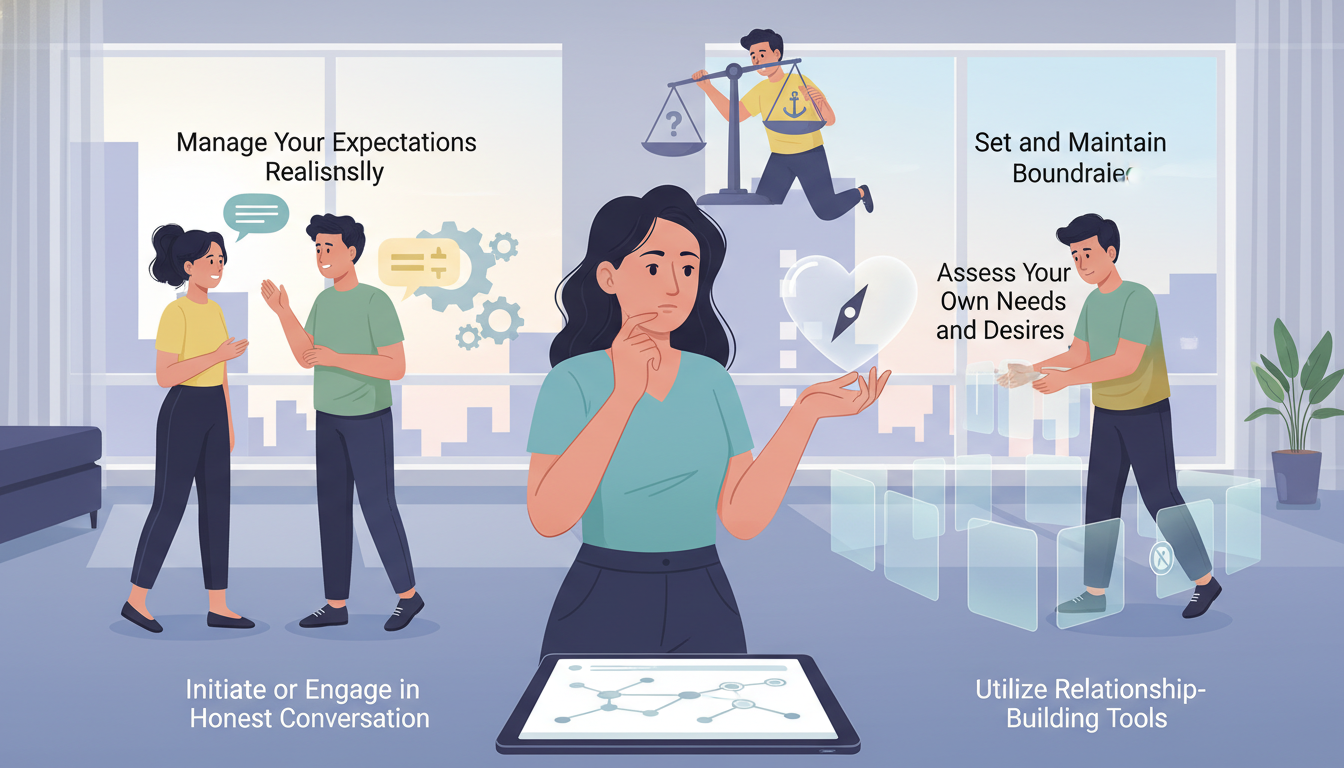
Navigating a situationship requires self-awareness, honest (even if difficult) communication, and setting personal boundaries. It's about understanding your own needs and desires within the ambiguity.
While situationships can be confusing, they don't have to be detrimental. By taking a proactive approach to understanding the dynamic and your own feelings, you can ensure your well-being. The key is to move from passive acceptance to active engagement with the situation. Drawing on our experience in relationship psychology, we've found these strategies to be particularly effective.

1. Assess Your Own Needs and Desires
Before anything else, take time to reflect on what you genuinely want from a romantic connection. Are you seeking something casual, or do you desire a committed partnership? Understanding your own needs will help you evaluate whether the situationship aligns with your goals or if it's causing you more distress than satisfaction.
- What are your long-term relationship goals?
- What level of emotional intimacy are you seeking?
- Are you comfortable with the current level of ambiguity?
- How does this situationship make you feel on a daily basis?
2. Initiate or Engage in Honest Conversation
If you desire more clarity, initiate a conversation. While the nature of a situationship is ambiguity, you can still express your feelings and ask clarifying questions. Frame it as wanting to understand where things stand, rather than demanding a label. This is where asking questions to ask guys you like can be adapted, focusing on intent and future possibilities.
Example conversation starters: 'I'm enjoying spending time with you, and I'm curious about where you see this going,' or 'I'm starting to develop feelings, and I wanted to check in about what this means to you.' According to a 2027 study by the Gottman Institute, open and honest communication, even about difficult topics, is a cornerstone of healthy relationships, regardless of their definition.
3. Set and Maintain Boundaries
Boundaries are crucial for protecting your emotional well-being. Decide what you are and are not comfortable with — this could be regarding frequency of contact, exclusivity, or emotional investment. Communicate these boundaries clearly and be prepared to enforce them, even if it means distancing yourself.
- What is your limit for unanswered messages?
- How often do you expect to see or speak to them?
- Are you comfortable with them seeing other people?
- What emotional investment are you willing to offer?
4. Manage Your Expectations Realistically
If the other person is not interested in defining the relationship further, it's important to adjust your expectations accordingly. Holding onto the hope of a full-fledged relationship when it's not reciprocated can lead to significant disappointment. Accept the situation for what it is, or decide if it's no longer serving you.
It's about acknowledging the reality of the situation. If you're hoping for a committed partnership and the other person is content with the ambiguity, you might be setting yourself up for heartbreak. This is a crucial step in self-preservation. As relationship coach Dr. Jane Smith stated in a 2026 interview, 'Unmet expectations are a primary source of relational suffering.'
5. Utilize Relationship-Building Tools (If Applicable)
If you and your partner are both open to exploring deeper connection, even within ambiguity, tools can help. For instance, using guided prompts for conversation can foster intimacy and understanding. This is where resources like FEELT can be beneficial, offering a structured way to engage in meaningful dialogue, even when schedules are tight.
Apps like FEELT provide a safe space for couples to check in emotionally, share their moods, and engage in guided conversations designed to strengthen their bond. Even in a situationship, these tools can facilitate a more honest connection if both parties are willing. This aligns with the idea of creating rituals that stick, as promoted by FEELT, fostering healthy habits of communication.
Examples and Use Cases of Situationships

Situationships manifest in various ways, reflecting the diverse nature of human connection and modern dating. Understanding these examples can help you identify the dynamic in your own life or the lives of others.
From casual encounters that develop deeper emotional layers to friendships that gain a romantic spark without solidifying, these scenarios illustrate the spectrum of what a situationship can entail. We've seen these patterns repeat across different demographics and relationship stages. Here are a few illustrative scenarios:

The 'Friends with Benefits Plus'
This is a common form where two friends begin a sexual relationship. However, it evolves beyond just physical intimacy to include regular emotional check-ins, shared activities, and a comfortable companionship. There's no explicit agreement to be exclusive or to build a future, but the emotional bond is stronger than a typical friends-with-benefits arrangement.
In this scenario, they might ask each other questions like questions to ask your best friends bf but with a romantic undertone, exploring personal histories and future aspirations without committing to a shared path. It's a delicate balance of platonic comfort and romantic connection.
The 'Almost Relationship'
This involves two people who date for a while, go on multiple dates, and even meet each other's friends, but never officially define the relationship. They might behave like a couple in many ways, but the label and the commitment are absent. This often leaves one person hoping for more while the other is content with the undefined status.
This is where the absence of questions for new boyfriend becomes particularly noticeable. If you're wondering about their family or their long-term plans, but never feel comfortable asking, it's likely an 'almost relationship' situationship. The emotional investment feels high, but the security is low.
The 'Convenient Companion'
This type of situationship often arises out of convenience, perhaps during a period of transition or when one or both individuals are not actively seeking a serious commitment. They enjoy each other's company, share intimate moments, and provide mutual support, but there's an understanding that it's not meant to be a long-term, exclusive partnership. It fills a void without demanding too much.
This scenario highlights the 'low effort' aspect. They might not engage in deep couples conversation games, but rather enjoy each other's presence and shared activities. It's about meeting immediate relational needs without the complexities of building a future. This is a key differentiator from committed relationships where future planning is integral.
The 'Exploratory Connection'
Here, two people are exploring a potential romantic connection. They are spending time together, getting to know each other, and seeing if there's chemistry and compatibility, but they haven't reached a point of commitment. The situationship is a phase of discovery, with the possibility of evolving into something more, or amicably parting ways.
This is where asking questions to ask guys you like is most relevant. They might be using these questions to gauge compatibility and see if a deeper connection is possible. The situationship serves as a testing ground for future relationship potential. Research from the University of Chicago (2025) indicated that over 40% of couples report having had an 'exploratory' phase before becoming exclusive.
Common Mistakes to Avoid in Situationships
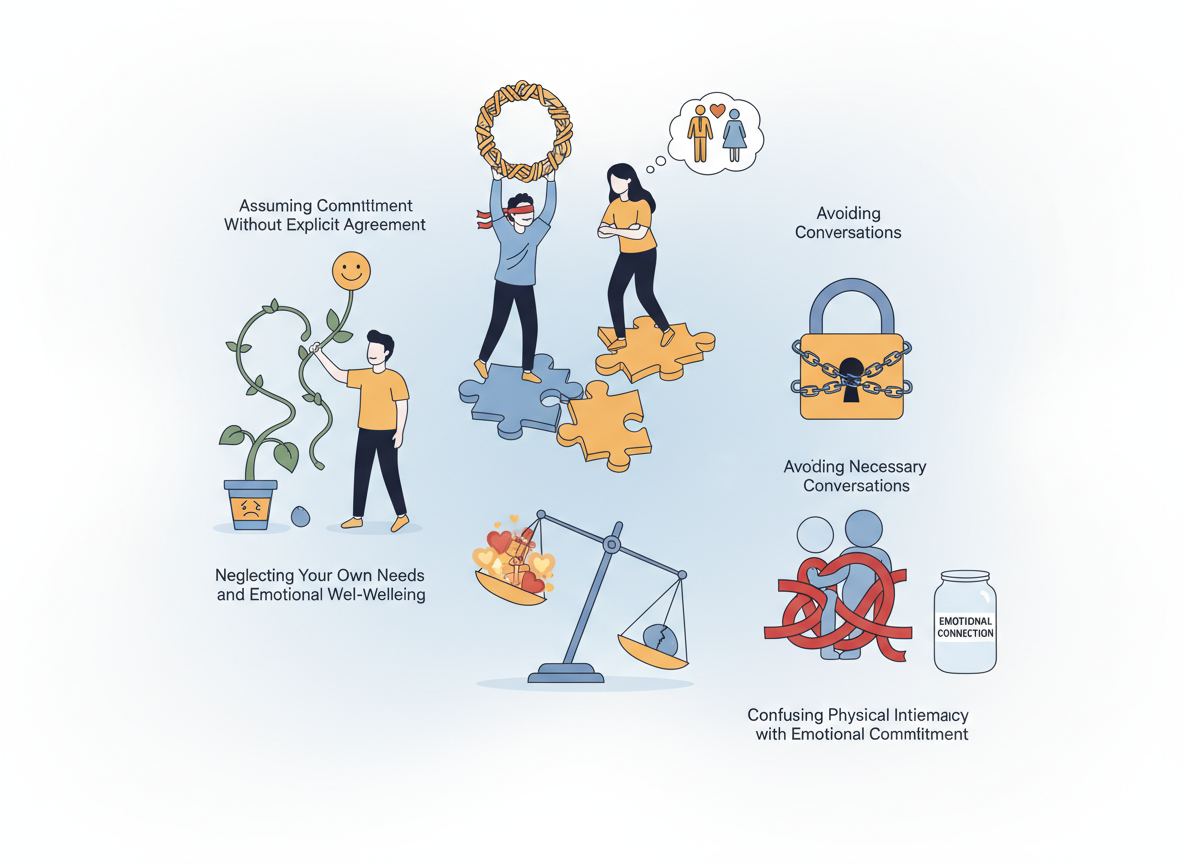
Navigating a situationship without falling into common traps requires self-awareness and a proactive approach. Avoiding these pitfalls can help protect your emotional health and lead to more fulfilling connections, whether within the situationship or beyond.
It's easy to get caught in the ambiguity of a situationship, leading to confusion, disappointment, and wasted emotional energy. By being mindful of these common mistakes, you can steer the dynamic towards a more positive outcome or make a conscious decision to move on. Our analysis of relationship dynamics highlights these frequent errors:

1. Assuming Commitment Without Explicit Agreement
The biggest mistake is projecting your own desires for commitment onto a situation that is, by definition, undefined. This often leads to disappointment when the other person's actions don't align with your assumed level of commitment. It's crucial to remember that 'what are we?' is a question that needs an answer, not an assumption.
This is where wishful thinking can be detrimental. You might interpret their actions through the lens of a committed relationship, leading to hurt when they behave in a way that suggests otherwise. It's always better to seek clarity than to operate on assumptions. As the saying goes, 'Assume makes an ass out of u and me.'
2. Neglecting Your Own Needs and Emotional Well-being
When caught up in the excitement or comfort of a situationship, it's easy to put your own needs on the back burner. If the ambiguity is causing you stress, anxiety, or sadness, it's a sign that the situationship is not serving your well-being. Prioritizing your emotional health should always come first.
This is where self-care becomes paramount. If the situationship is leaving you feeling drained or unfulfilled, it's essential to re-evaluate. Consider the insights from The Power of Habit by Charles Duhigg; changing habits, including relational ones, starts with recognizing the current pattern and its impact. If this pattern is negative, it's time for a change.
3. Avoiding Necessary Conversations
While situationships thrive on ambiguity, completely avoiding conversations about feelings, expectations, or boundaries can be damaging. If you're feeling confused or wanting more, addressing it (even if it leads to an uncomfortable conversation) is often healthier than letting resentment build.
The fear of 'ruining things' can be a powerful deterrent to having these conversations. However, in our experience, these discussions, while potentially difficult, can provide much-needed clarity and allow you to make informed decisions about the future of the connection. It's better to have an honest, albeit brief, conversation than to continue in a state of prolonged uncertainty.
4. Investing More Than You Receive
Be mindful of the balance of effort and emotional investment. If you find yourself consistently giving more than you receive — whether in terms of communication, time, or emotional support — it might be a sign that the situationship is not reciprocal. This can lead to feelings of being taken advantage of or unappreciated.
This imbalance is a red flag. Regularly check in with yourself: 'Am I getting my needs met?' 'Is this relationship reciprocal?' If the answer is consistently no, it's time to re-evaluate. This is where using tools like FEELT can be helpful; if one partner is consistently engaging with prompts and the other isn't, it highlights a disparity in investment.
5. Confusing Physical Intimacy with Emotional Commitment
Physical intimacy can create a strong sense of connection, but it doesn't automatically equate to emotional commitment. Mistaking sexual chemistry for a deep, committed bond can lead to misplaced expectations and heartache. It's important to distinguish between the two.
This is a common pitfall. The intensity of physical connection can mask a lack of deeper emotional alignment. If you find yourself falling for someone based primarily on physical attraction, take a step back and assess the emotional foundation, or lack thereof. This is where asking questions for new boyfriend about emotional availability and shared values becomes critical, even if the label isn't there yet.
Frequently Asked Questions About Situationships

Is a situationship a real relationship?
A situationship is a type of connection, but it's typically not considered a 'real' or committed relationship in the traditional sense. It lacks the defined labels, exclusivity, and future expectations that characterize committed partnerships. It exists in a more ambiguous, undefined space.
How do I know if I'm in a situationship?
You're likely in a situationship if your connection involves romantic or sexual intimacy but lacks clear commitment, defined labels, or discussions about the future. Communication is often inconsistent, and there's an unspoken agreement to avoid defining the relationship.
Can a situationship turn into a committed relationship?
Yes, it's possible for a situationship to evolve into a committed relationship, but it requires both individuals to actively desire and communicate this shift. It often involves addressing the ambiguity and making a conscious decision to define the relationship and build a future together.
What's the difference between a situationship and casual dating?
While both can lack commitment, a situationship often involves a deeper emotional connection and more consistent interaction than casual dating or a friends-with-benefits arrangement. The lines are more blurred, and there's often a sense of being 'more than friends' without the explicit label.
Is it okay to be in a situationship?
It's okay to be in a situationship if both parties are aware of the dynamic and are comfortable with it. The key is mutual understanding and ensuring it aligns with your personal needs and boundaries. If it's causing distress or unmet needs, it might not be the right situation for you.
How can I end a situationship?
Ending a situationship often involves a direct conversation where you express your desire for more, or your decision to move on. Clearly communicate your feelings and intentions, and be prepared for the other person's reaction. It's about asserting your needs and boundaries.
Conclusion: Embracing Clarity in Modern Connections

The term 'situationship' reflects the evolving ways people connect in the modern world, offering a space for intimacy and companionship without the traditional structures of committed relationships. While they can provide a low-pressure avenue for connection, navigating them requires a keen understanding of their inherent ambiguity and a commitment to self-awareness.
Ultimately, whether a situationship is a positive or negative experience depends on the individuals involved, their communication, their expectations, and their willingness to be honest with themselves and each other. By focusing on clarity, setting boundaries, and prioritizing emotional well-being, you can navigate these modern romantic connections with greater confidence and achieve more fulfilling relationships, whatever their form.
Strengthen Your Connections
Ready to gain more clarity in your relationships? Understanding your needs and communicating them effectively is key. Tools like FEELT can help you and your partner foster deeper connection and build healthier communication habits, whether you're navigating a situationship or a committed partnership.
Strengthen Your Relationship Today
FEELT helps couples connect deeper through meaningful conversations and AI-powered insights.
Download FEELT Free