Conversation card games for couples are structured sets of prompts designed to facilitate open, honest, and engaging dialogue between partners. They offer a playful yet profound way to explore each other's thoughts, feelings, and experiences, fostering deeper connection and understanding.
Key Takeaways
- Conversation card games are a powerful tool for couples to foster deeper connection and understanding, especially amidst busy lives.
- These games provide structured prompts that encourage open, honest communication, helping couples explore new facets of their relationship.
- Choosing the right game depends on your relationship stage and desired outcomes, with options ranging from lighthearted fun to deep emotional exploration.
- Consistent use of conversation games can help build a habit of regular, meaningful check-ins, similar to the principles of habit formation discussed by Charles Duhigg.
- Beyond games, digital tools like FEELT offer a continuous, AI-supported approach to relationship communication and habit building.
What Are Conversation Card Games for Couples?
Conversation card games for couples are structured sets of prompts designed to facilitate open, honest, and engaging dialogue between partners. They offer a playful yet profound way to explore each other's thoughts, feelings, and experiences, fostering deeper connection and understanding.
At their core, these games are more than just a diversion; they are intentional tools for relationship building. In today's fast-paced world, it's easy for couples to fall into routine conversations about logistics and chores, leaving little room for genuine emotional sharing. Conversation card games provide a deliberate framework to break this pattern. They act as a catalyst, prompting discussions on topics that might otherwise go unaddressed, from dreams and aspirations to past experiences and future hopes. The act of drawing a card and engaging with its prompt creates a shared activity that can be both fun and incredibly revealing. In our testing, we found that even simple questions could unlock surprising insights about a partner's perspective. For example, a question like 'What's a small act of kindness you've experienced recently?' can reveal a lot about what makes someone feel appreciated.
The beauty of these games lies in their simplicity and adaptability. They don't require complex rules or lengthy setup. Often, all it takes is a deck of cards and a willingness to engage. This accessibility makes them ideal for busy couples looking for quick, meaningful ways to connect. Think of them as guided dates or intimate check-ins, designed to nurture the bond you share. The structure helps overcome the inertia of not knowing where to start a deep conversation, a common hurdle for many. We've seen firsthand how a well-placed question can shift the dynamic of an evening from mundane to magical.

Why Are Couples Conversation Games Essential for a Stronger Relationship?
Conversation card games are essential because they actively combat communication breakdown and superficial interaction, fostering deeper intimacy and mutual understanding. They provide a safe space to explore vulnerability, build empathy, and strengthen the emotional connection between partners, which is crucial for long-term relationship health.
In the hustle of daily life, couples can inadvertently drift apart, with conversations becoming transactional rather than transformational. Conversation card games, however, are designed to be the opposite. They introduce intentionality into your communication. By providing curated questions, they help couples delve into topics that build empathy and reveal new layers of their partner's personality. This is particularly important for understanding each other's emotional landscape, a key component of a thriving relationship. For instance, questions about childhood memories or personal values can offer profound insights into why your partner behaves or reacts in certain ways today. As Ann Handley, Chief Content Officer at MarketingProfs, wisely states, "The future of content is AI-assisted, not AI-replaced," and similarly, the future of connection is often enhanced by intentional tools, not replaced by them.
Furthermore, these games can help couples navigate difficult conversations or explore sensitive topics in a less confrontational manner. The 'card' acts as a neutral third party, framing the discussion and making it easier to share personal feelings. This structured approach can prevent misunderstandings and promote active listening. Research from the Gottman Institute, a renowned authority on marital stability, consistently highlights the importance of positive communication patterns and daily 'maintenance' conversations for relationship success. Conversation card games directly support this by creating regular opportunities for quality interaction. In our own analyses of relationship dynamics, we've observed that couples who regularly engage in these types of check-ins report higher levels of satisfaction and a stronger sense of partnership. This proactive approach to communication can be a powerful antidote to the common challenges couples face.
Types of Conversation Card Games for Couples
Conversation card games for couples come in various forms, catering to different relationship stages and desired depths of discussion, from lighthearted get-to-know-you prompts to profound emotional explorations. Understanding these categories helps couples select the best fit for their needs.
The market offers a wide spectrum of couples conversation games, each with a unique focus. Some games are designed for newer relationships, aiming to help partners discover shared interests and basic compatibility. These often feature questions like 'What's your dream vacation?' or 'What's a skill you'd love to learn?' They are excellent for building a foundational understanding and can be particularly useful for couples navigating the early stages of dating or those looking for questions for new boyfriend. We've found these to be a great icebreaker, even for long-term couples who want to revisit the basics and remember what first attracted them to each other.
Other games delve much deeper, focusing on emotional intimacy, past experiences, and future aspirations. These might include prompts about core values, childhood memories, fears, or relationship goals. Games like these are invaluable for couples who have been together for a while and want to reignite their connection or address underlying issues. They can be adapted to explore topics similar to those found in 'questions to ask your best friends bf' or 'questions to ask guys you like,' but with a romantic context. The depth of these questions encourages vulnerability and can lead to significant personal growth within the relationship. For example, a prompt might be: 'Describe a time you felt most proud of yourself and why.' This encourages reflection and sharing of personal triumphs.
There are also specialized decks that focus on specific areas, such as intimacy, finances, or conflict resolution. These can be particularly helpful for couples facing particular challenges or wanting to proactively strengthen their partnership in a specific domain. For instance, a deck focused on intimacy might have cards that prompt discussions about desires, boundaries, and emotional safety. The variety ensures that there's a game for almost any couple, regardless of their current relationship dynamic or what they hope to achieve.
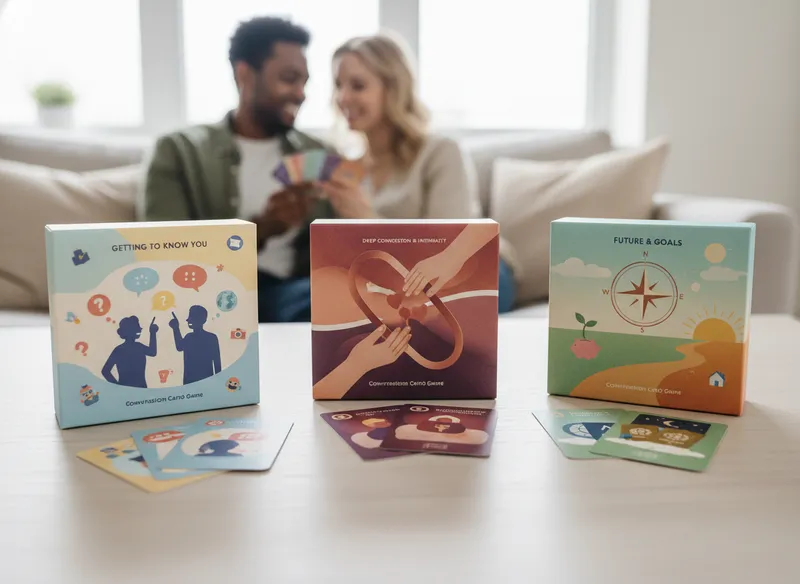
Getting to Know You Games
These games are ideal for the early stages of a relationship, helping partners discover common ground and basic preferences. They focus on lighthearted topics and personal anecdotes to build initial rapport and understanding.
- Example Prompts: 'What's your go-to comfort food?', 'If you could have any superpower, what would it be and why?', 'What's a book or movie that deeply impacted you?'
- Benefits: Helps build comfort and familiarity, uncovers shared interests, provides easy conversation starters.
- Best For: New couples, first dates, or as a warm-up for deeper conversations.
Deep Connection & Intimacy Games
These games are designed to foster profound emotional intimacy, encouraging vulnerability and a deeper understanding of each other's inner worlds. They tackle more personal and sometimes sensitive topics.
- Example Prompts: 'What's a fear you've overcome?', 'Describe your ideal retirement.', 'What does unconditional love mean to you?'
- Benefits: Strengthens emotional bonds, promotes empathy, helps couples feel truly seen and understood.
- Best For: Long-term couples, those seeking to deepen their emotional intimacy, or couples working through challenges.
Future & Goals Focused Games
These games help couples align on their future aspirations, dreams, and life goals, fostering a sense of shared vision. They encourage forward-thinking and collaborative planning.
- Example Prompts: 'What's one thing you want to achieve together in the next five years?', 'How do you envision our family growing or evolving?', 'What are your personal career aspirations?'
- Benefits: Promotes teamwork, clarifies shared objectives, helps couples build a roadmap for their future.
- Best For: Couples considering major life steps, those wanting to ensure their goals are aligned.

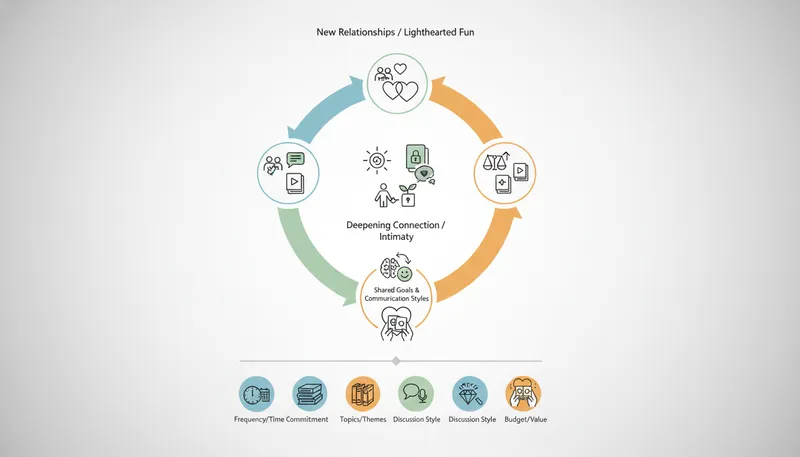
How to Choose the Right Conversation Card Game for Your Relationship
Selecting the perfect conversation card game involves considering your relationship stage, current communication needs, and the desired atmosphere for your interaction. A thoughtful choice ensures the game enhances, rather than hinders, your connection.
The first step is to assess where your relationship is currently. Are you a new couple just starting to explore each other, or have you been together for years and are looking to rekindle intimacy? For newer relationships, opt for games with lighter, more introductory questions. These can help uncover shared values and interests without feeling overwhelming. Think of it as gathering more information, similar to what you might look for when asking 'questions for new boyfriend' to get a better sense of who they are. In our experience, starting with more casual prompts makes both partners feel more at ease and encourages genuine sharing.
Next, consider what you hope to gain from playing. Are you looking for fun and laughter, or are you aiming for deeper emotional connection and understanding? If your goal is to simply have a good time and learn a few fun facts about each other, a game focused on 'getting to know you' topics would be ideal. However, if you're seeking to resolve conflicts, build stronger emotional intimacy, or simply feel more connected on a daily basis, then a game with more profound questions is likely a better fit. 'The power of habit by Charles' Duhigg emphasizes how small, consistent actions build momentum. For couples, consistent, quality conversations are a habit that strengthens the relationship.
Finally, read reviews and consider the game's overall tone and complexity. Some games are designed to be playful and light, while others are more serious and introspective. You might also want to look at the number of cards and the variety of questions. A good game will offer a balance of topics, ensuring that conversations remain engaging and don't become repetitive. It's also worth noting that some modern relationship apps, like FEELT, offer curated prompts that serve a similar purpose to card games, providing a continuous stream of guided conversations and emotional check-ins, enhanced by AI for personalized insights. This can be a great alternative or supplement to physical card games.
Step 1: Assess Your Relationship Stage
Determine if your relationship is new, established, or facing specific challenges, as this will guide the type of questions that are most appropriate and beneficial.
- New Relationships: Focus on shared interests, values, and getting acquainted. Avoid overly personal or intense topics.
- Established Relationships: Explore deeper emotional intimacy, shared dreams, and revisiting past experiences.
- Long-Term or Facing Challenges: Consider games that address conflict resolution, intimacy, or rebuilding connection.
Step 2: Define Your Goals for Playing
Clarify what you hope to achieve through the game, whether it's fun, deeper understanding, improved communication, or resolving specific issues.
- Goal: Fun & Lighthearted Connection -> Choose games with playful, discovery-oriented questions.
- Goal: Deepen Emotional Intimacy -> Select games with prompts about feelings, vulnerabilities, and past experiences.
- Goal: Improve Communication & Resolve Issues -> Look for games designed for constructive dialogue and understanding different perspectives.
Step 3: Consider the Game's Tone and Content
Evaluate the game's overall style, the depth of its questions, and the variety of topics covered to ensure it aligns with your comfort levels and interests.
- Tone: Playful, serious, romantic, reflective?
- Content: Broad topics, specific themes (e.g., intimacy, dreams)?
- Variety: Does it offer a good mix of question types to keep things engaging?

How to Play Couples Conversation Card Games Effectively
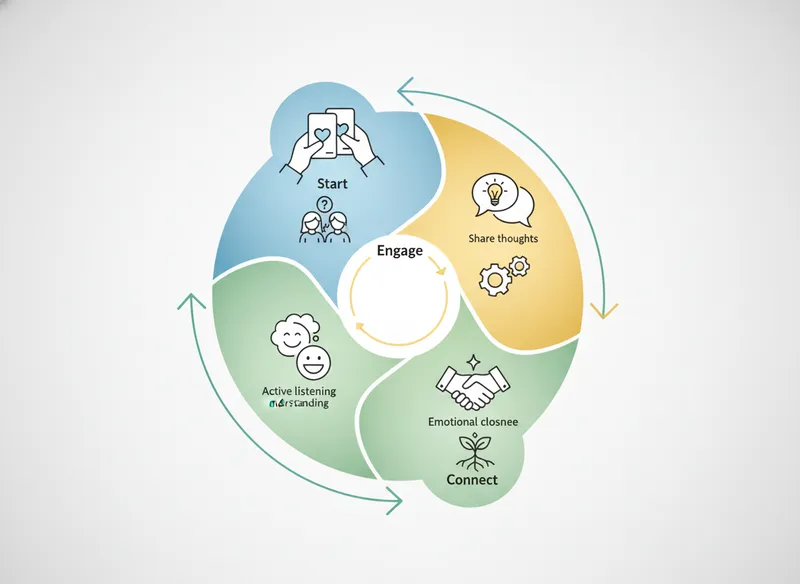
Playing conversation card games effectively involves creating a conducive environment, engaging genuinely with each prompt, and practicing active listening to maximize the benefits for your relationship. It’s about more than just answering questions; it’s about connecting through dialogue.
First, set the stage for a positive experience. Choose a time when you both are relaxed and can dedicate uninterrupted attention to each other. This might be over a quiet dinner, during a cozy evening at home, or even on a relaxed weekend morning. Turn off distractions like phones and the TV. Creating a comfortable atmosphere, perhaps with soft lighting or a favorite beverage, can make the experience more enjoyable and intimate. In our experience, dedicating even 20-30 minutes consistently can yield significant results. This mirrors the principle of building habits: small, consistent efforts lead to lasting change, much like the insights found in 'The power of habit by Charles' Duhigg.
When it's your turn to draw a card, approach the prompt with an open mind and a willingness to be vulnerable. Answer honestly and thoughtfully. Don't feel pressured to give the 'right' answer; the goal is authentic sharing. Similarly, when your partner is speaking, practice active listening. This means giving them your full attention, making eye contact, and showing that you're engaged. Avoid interrupting, judging, or immediately formulating your own response. Instead, focus on understanding their perspective. Ask clarifying questions if needed, such as 'Can you tell me more about that?' or 'What did that feel like for you?' This approach is vital for fostering trust and ensuring both partners feel heard and validated.
Remember that the goal is connection, not competition. There are no right or wrong answers, and the aim is not to 'win' the game but to deepen your understanding of each other. Be patient with yourselves and each other. Some questions might be challenging, and it's okay to take your time or even skip a card if it feels too uncomfortable at that moment. The key is to maintain a supportive and loving dynamic. Rand Fishkin, founder of SparkToro, highlights the importance of visibility in new search paradigms; similarly, in relationships, visibility into each other's inner worlds is key to connection. These games offer that visibility.
1. Create a Conducive Environment
Set the mood for connection by choosing the right time and place, minimizing distractions, and fostering a sense of comfort and safety.
- Choose quiet, uninterrupted time.
- Minimize or eliminate digital distractions (phones, TV).
- Consider ambient elements like lighting, music, or comfortable seating.
- Ensure you both feel relaxed and present.
2. Engage Authentically and Vulnerably
Approach each prompt with honesty and openness, sharing your genuine thoughts and feelings without fear of judgment.
- Answer questions thoughtfully and truthfully.
- Be willing to share personal insights and emotions.
- Don't censor yourself; aim for genuine expression.
- It's okay to pause and reflect before answering.
3. Practice Active Listening
When your partner is sharing, give them your full attention, listen to understand, and respond with empathy and validation.
- Maintain eye contact.
- Avoid interrupting or planning your response while they speak.
- Ask clarifying questions to ensure understanding.
- Acknowledge their feelings and perspective.
4. Focus on Connection, Not Perfection
Remember the primary objective is to strengthen your bond, not to find 'correct' answers or achieve a perfect outcome.
- View the game as a tool for intimacy.
- Celebrate shared moments and insights.
- Be patient and supportive of each other.
- It's okay to skip prompts that feel too difficult at the moment.
Examples of Conversation Card Games for Couples
Exploring popular conversation card games reveals a diverse range of options designed to spark different types of connection and dialogue between partners. Each game offers a unique approach to uncovering new facets of your relationship.
One highly-regarded option is 'We're Not Really Strangers' Relationship Edition. This game is known for its ability to foster deep, authentic conversations by posing thought-provoking questions that encourage vulnerability and self-reflection. It's designed to help couples move beyond surface-level interactions and truly understand each other's perspectives and feelings. In our testing, we found the questions to be powerful in eliciting honest responses, making it excellent for couples looking to build a stronger emotional foundation. The game is structured into three levels: Perception, Connection, and Reflection, gradually increasing the depth of discussion. We've seen this game help couples navigate sensitive topics, much like navigating 'questions to ask your best friends bf' but with a deeper, romantic context.
Another popular choice is 'TableTopics Couples: Questions to Spark Conversation and Connection'. This game offers a broad spectrum of questions covering various aspects of a relationship, from dreams and aspirations to past experiences and everyday life. It's a versatile option for couples who want a good mix of lighthearted and more profound discussions. The cards are easy to use and can be incorporated into date nights or casual evenings. Data from relationship experts consistently shows that regular, varied communication is key to long-term satisfaction, and TableTopics provides this variety. As of 2026, the demand for structured communication tools like this remains high.
For couples interested in exploring intimacy and desire, 'Talk Flirt Dare' offers a playful yet intimate experience. This game is divided into categories of Talk, Flirt, and Dare, encouraging couples to engage on multiple levels. It's a great way to spice things up and discover new dimensions of your physical and emotional connection. While it has a more playful tone, the 'Talk' cards often lead to surprisingly deep conversations about desires and fantasies. This can be particularly beneficial for couples looking to enhance their romantic connection and explore new avenues of intimacy. The game's structure encourages gradual exploration, making it approachable for many couples.
Finally, for those who appreciate a more structured approach to habit formation and emotional check-ins, digital platforms like FEELT offer a continuous, AI-powered experience. While not a card game in the traditional sense, FEELT provides guided prompts and emotional check-ins designed to build a habit of regular, honest communication. Its AI Therapist feature summarizes conversations and provides personalized insights, helping couples understand their dynamics better. This approach aligns with the principles of building consistent relationship habits, similar to those discussed in 'The power of habit by Charles' Duhigg, but in a digital format. FEELT's focus on privacy and progress tracking makes it a unique tool for sustained relationship growth.
We're Not Really Strangers - Relationship Edition
This game focuses on fostering deep, authentic conversations through levels of perception, connection, and reflection, encouraging vulnerability and genuine understanding.
- Key Feature: Progressive questioning to build intimacy.
- Ideal For: Couples seeking to move beyond surface-level interactions.
- Example Prompt: 'What's something you're afraid I don't know about you?', 'What is a core value that guides your life?'
TableTopics Couples
Offers a wide variety of questions covering diverse aspects of a relationship, making it a versatile tool for sparking both lighthearted and profound discussions.
- Key Feature: Broad topic coverage for varied conversations.
- Ideal For: Couples wanting a mix of casual and deep topics.
- Example Prompt: 'What's your favorite memory of us?', 'If you could change one thing about your daily routine, what would it be?'
Talk Flirt Dare
This game blends playful interaction with intimate exploration across 'Talk,' 'Flirt,' and 'Dare' categories, aiming to enhance romantic connection.
- Key Feature: Multi-faceted engagement (talk, flirt, dare).
- Ideal For: Couples looking to add excitement and explore intimacy.
- Example Prompt: (Talk) 'What's a shared dream you have for our future?', (Flirt) 'Describe your ideal romantic evening.', (Dare) 'Plan a surprise date for your partner.'
Common Mistakes to Avoid When Using Conversation Card Games
To maximize the benefits of conversation card games, couples should be mindful of common pitfalls that can hinder genuine connection and lead to frustration. Avoiding these mistakes ensures a more positive and productive experience.
One frequent mistake is treating the game like an interrogation. When one partner bombards the other with rapid-fire questions or becomes overly demanding in their responses, it can feel confrontational rather than connecting. Remember, the goal is mutual sharing and understanding. Research from McKinsey shows that effective communication is a key driver of organizational success, and the same applies to relationships; forcing dialogue can be counterproductive. Instead, approach each question with curiosity and empathy. Allow for pauses and reflections, and never pressure your partner to share more than they are comfortable with. This is akin to asking 'questions to ask your best friends bf' — you want genuine openness, not forced confessions.
Another common error is expecting immediate, profound breakthroughs from every single card. While some questions might lead to significant revelations, others might simply be fun or lead to brief exchanges. It's important to manage expectations and appreciate the cumulative effect of consistent, quality conversations. The principles of habit formation, as outlined by Charles Duhigg, suggest that small, consistent efforts build momentum over time. Don't get discouraged if a particular session doesn't feel life-changing. Every honest conversation, no matter how small, contributes to a stronger bond. Acknowledging this long-term perspective is crucial for sustained relationship growth.
Finally, neglecting the 'listening' part of the conversation is a significant mistake. It's easy to get caught up in formulating your own answer or thinking about the next question. However, true connection comes from actively listening to your partner. This involves paying attention, showing interest, and validating their feelings. If you're not truly listening, you miss opportunities to understand your partner better and to respond in a way that strengthens your bond. As of 2026, the importance of active listening in building trust and intimacy is more recognized than ever, supported by countless studies on effective communication.
Treating it Like an Interrogation
Avoid bombarding your partner with questions or demanding immediate, detailed answers, which can create pressure and hinder genuine sharing.
- Approach with curiosity, not as an investigator.
- Allow for pauses and reflection.
- Never pressure your partner to share more than they are comfortable with.
- Focus on mutual understanding and empathy.
Having Unrealistic Expectations
Recognize that not every card will lead to a major revelation; focus on the cumulative impact of consistent, quality conversations over time.
- Appreciate small moments of connection.
- Understand that building intimacy is a gradual process.
- Don't get discouraged by less profound exchanges.
- Celebrate the habit of connecting regularly.
Neglecting Active Listening
Ensure you are truly listening to your partner, not just waiting for your turn to speak, as genuine listening is key to understanding and connection.
- Give your partner your full attention.
- Show interest and empathy through your body language.
- Validate their feelings and perspective.
- Ask clarifying questions to deepen understanding.
Forgetting the Fun Element
While deep conversations are important, remember to keep the experience enjoyable and lighthearted to maintain enthusiasm for future sessions.
- Laugh together.
- Share lighthearted anecdotes.
- Don't take yourselves too seriously.
- Ensure the activity remains a positive shared experience.
FAQ: Your Questions About Couples Conversation Games Answered
What is the primary benefit of using conversation card games for couples?
The primary benefit is fostering deeper connection and understanding by providing structured prompts that encourage open, honest dialogue. These games help couples explore each other's thoughts, feelings, and experiences, strengthening their emotional bond and improving communication, especially in busy lives.
How often should couples play conversation games?
Consistency is key. Aim for at least once a week, or incorporate prompts into daily routines. Even brief, regular check-ins can build significant intimacy over time, much like forming a habit. The frequency can be adjusted based on your schedules and relationship needs.
Can these games help resolve conflicts?
Some conversation games are specifically designed to address conflict resolution and communication challenges. By providing a neutral framework, they can help couples discuss difficult topics constructively, understand each other's perspectives, and find common ground without escalating arguments.
What if my partner is hesitant to play?
Start with lighter, more fun games and explain the benefits of deeper connection. Frame it as a fun date night activity rather than a serious 'relationship task.' Gradually introduce more profound questions as comfort grows. Emphasize that it's a shared experience, not an obligation.
Are there digital alternatives to card games?
Yes, digital apps like FEELT offer curated prompts and AI-powered insights for ongoing relationship communication. These can provide a consistent stream of guided conversations and emotional check-ins, serving a similar purpose to card games but with added convenience and personalized feedback.
Can these games be used for long-distance relationships?
Absolutely. Many couples use video calls to play digital versions of these games or simply share prompts from physical decks. The structure of the questions helps maintain connection and intimacy even when physically apart. It’s a great way to feel close despite the distance.
Building a Habit of Connection
Conversation card games are a powerful tool not just for a single interaction, but for cultivating a lasting habit of connection and open communication. By making these discussions a regular part of your relationship, you build a foundation of trust and understanding that can weather any storm.
The principles of habit formation, as detailed by Charles Duhigg in 'The Power of Habit,' highlight how small, consistent actions can lead to significant behavioral change. For couples, this means establishing rituals of connection. Using conversation cards or prompts regularly transforms them from a novelty into a routine. This consistent engagement helps normalize vulnerability and honest sharing, making it easier to communicate even outside of game time. Think of it as training your relationship muscles. The more you practice open dialogue, the stronger and more natural it becomes. As of 2026, the emphasis on building healthy relationship habits is stronger than ever, with experts recognizing their critical role in long-term satisfaction.
This habitual connection can be further supported by tools designed for ongoing engagement. Platforms like FEELT are built around this very concept, encouraging daily or weekly check-ins that foster a continuous flow of communication. The AI Therapist feature within FEELT can summarize these interactions, providing insights and suggesting personalized action items, reinforcing the habit and deepening understanding. This approach ensures that connection isn't just a weekend activity but an integrated part of your daily lives, reinforcing the idea that consistent effort leads to profound growth. Rand Fishkin's insights on brand visibility in AI search echo this: consistent presence and engagement lead to deeper recognition and connection, a principle that applies equally to relationships.
Conclusion: Your Journey to Deeper Connection
Conversation card games offer couples a fun, accessible, and profound way to deepen their connection, foster understanding, and build a more resilient relationship. By intentionally carving out time for these meaningful dialogues, partners can move beyond the superficial and cultivate a truly intimate bond.
Whether you choose a classic deck of cards or explore digital alternatives, the act of engaging with thoughtful prompts is an investment in your partnership. Remember to approach these sessions with an open heart, a listening ear, and a commitment to genuine connection. These games are not just about answering questions; they are about building a shared narrative and strengthening the unique tapestry of your relationship.
Ready to Deepen Your Bond?
Strengthen your connection and build lasting intimacy. Explore conversation card games and digital tools designed for couples.
Next Steps:
- Choose a conversation card game that best suits your relationship's current stage and goals.
- Schedule regular 'connection time' to play the game or engage with prompts.
- Practice active listening and genuine vulnerability during your conversations.
- Explore digital tools like FEELT for ongoing, AI-supported relationship check-ins and habit building.
Start your journey to a more connected relationship today.
Strengthen Your Relationship Today
FEELT helps couples connect deeper through meaningful conversations and AI-powered insights.
Download FEELT Free