"Questions to ask guys you like" are prompts designed to initiate meaningful conversations, foster understanding, and build connections with men you are romantically or platonically interested in. They move beyond small talk to explore personality, values, and shared experiences, laying the groundwork for a stronger relationship.
Key Takeaways

- Asking thoughtful questions is key to uncovering shared values, interests, and personality traits, moving beyond superficial interactions.
- Tailor your questions to the stage of your relationship, from initial dating to established friendships.
- Active listening and genuine curiosity are as crucial as the questions themselves for building rapport.
- Questions can reveal a person's sense of humor, aspirations, and how they handle challenges, offering valuable insights.
- Utilizing conversation starters, like those found in couples conversation games, can break the ice and encourage deeper dialogue.
What Are "Questions to Ask Guys You Like" and Why Do They Matter?

At its core, asking the right questions is about showing genuine interest and creating an opportunity for mutual discovery. In a world often dominated by superficial online interactions and busy schedules, intentional conversation is a powerful tool. It allows you to gauge compatibility, understand someone's character, and determine if there's a deeper connection to be explored. This isn't just about dating; these principles apply when you want to get to know someone better, whether it's a potential partner, a new friend, or even questions to ask your best friends bf to deepen your understanding of their circle.
The power of a well-placed question can't be overstated. It's an invitation for vulnerability and openness. When you ask someone about their dreams, their fears, or what makes them laugh, you're giving them a gift: your attention and your willingness to see them more fully. This act of engaging deeply is what transforms acquaintances into friends and can spark the beginnings of romance. For instance, when looking for questions for new boyfriend, the goal is to move past initial impressions and understand his core values and how he approaches life.
The Psychology Behind Effective Questioning
Effective questioning taps into fundamental psychological principles of connection and self-disclosure. When you ask open-ended questions, you encourage the other person to share more than a simple 'yes' or 'no.' This process, known as reciprocal self-disclosure, is crucial for building intimacy. As one person shares more, the other feels more comfortable doing the same, creating a positive feedback loop. According to research by Dr. Arthur Aron, author of the \"36 Questions That Lead to Love,\" guided, intimate questioning can accelerate the development of closeness between strangers.
Furthermore, active listening, which is the essential companion to asking questions, signals respect and validation. When someone feels truly heard, their willingness to open up increases significantly. This is a foundational element for any healthy relationship, whether it's a romantic partnership or a strong friendship. It’s why tools like FEELT, designed to facilitate warm, honest conversations, emphasize creating habits of checking in and understanding each other's emotional states. The app’s AI Therapist, for example, summarizes check-ins, providing insights that stem directly from guided communication.
Moving Beyond Small Talk: Uncovering Deeper Layers
Small talk is a social lubricant, essential for initial interactions, but it rarely fosters deep connection. The aim of asking targeted questions is to bypass the superficial and delve into what truly makes a person tick. This involves understanding their passions, their perspectives on life, their past experiences, and their future aspirations. For example, instead of asking \"What do you do for a living?\" a more insightful question might be \"What do you find most fulfilling about your work, or what drew you to it?\" This opens the door to their motivations and values. This is also relevant when considering questions for new boyfriend — you want to learn about his passions, not just his job title.
Consider the concept of \"The Power of Habit\" by Charles Duhigg. Building a habit of asking thoughtful questions can, over time, create a stronger relational habit. It’s not just about a single conversation; it’s about establishing a pattern of genuine inquiry and shared vulnerability. This consistent effort is what cultivates lasting bonds. When you consistently show interest in understanding someone's inner world, you build trust and a foundation for a more profound relationship.

Categories of Questions to Spark Connection
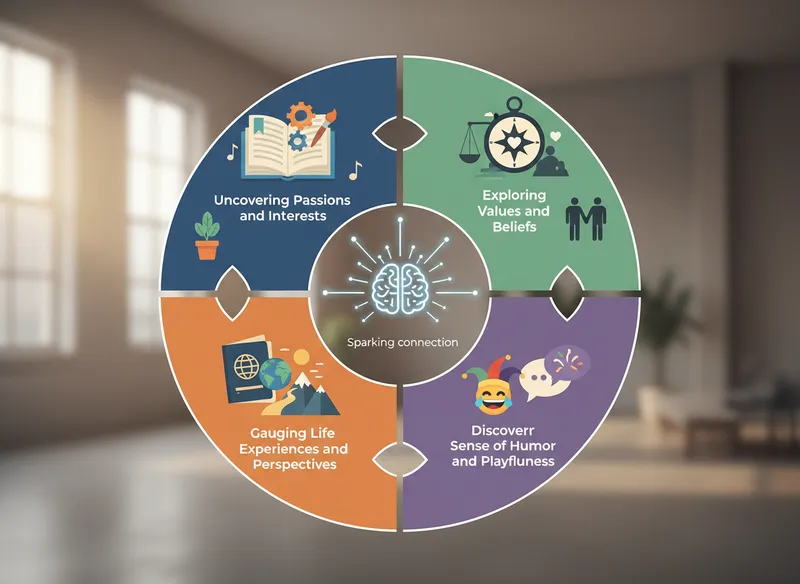
To effectively engage someone you like, it's helpful to categorize your questions. This ensures you cover various aspects of their personality and life, leading to a more well-rounded understanding. These categories can range from lighthearted to deeply personal, depending on the comfort level and the stage of your relationship. Think of these as building blocks for a robust conversation, much like the structured prompts in couples conversation games are designed to guide dialogue.
When you're looking for questions to ask guys you like, it's beneficial to have a mental toolkit. This allows you to pivot naturally in a conversation rather than feeling put on the spot. Each category serves a different purpose in revealing different facets of their personality and experiences. The goal is always to foster a sense of mutual understanding and shared experience.
Uncovering Passions and Interests
Understanding what excites someone is a fantastic way to connect. These questions explore their hobbies, interests, and what they genuinely enjoy spending their time on. They reveal what brings them joy and what they're passionate about. For example, instead of just asking \"Do you like movies?\", try \"What's a movie that has really stuck with you, and why?\" This invites a more personal and detailed response.
- What's something you're really passionate about right now?
- If you had a free weekend with no obligations, how would you ideally spend it?
- What's a skill you'd love to learn or master?
- What kind of music or podcasts do you gravitate towards, and what do you like about them?
- Is there a cause or charity you feel strongly about?
Exploring Values and Beliefs
Deeper connections are often built on shared values. These questions touch on their moral compass, their outlook on life, and what they consider important. They can be more serious but are invaluable for assessing long-term compatibility. \"What does success mean to you?\" is a great example, as it reveals their personal definition beyond societal norms. This is key when considering questions for new boyfriend if you're looking for long-term potential.
- What's one of your core principles that you try to live by?
- What does a fulfilling life look like to you?
- How important is family or community to you?
- What's a belief you hold that might be considered unconventional?
- What are your thoughts on [a current event or social issue]? (Use cautiously and with respect)
Gauging Life Experiences and Perspectives
Past experiences shape who we are. These questions explore their history, their learnings, and how they view the world based on what they've been through. They can reveal resilience, humor, and wisdom. Asking about a time they overcame a challenge, for example, offers insight into their problem-solving skills and mindset. This is where you might ask questions to ask your best friends bf to understand his background and how he became the person he is.
- What's a significant lesson you've learned from a past mistake?
- What's one of your most memorable travel experiences, or a place you dream of visiting?
- What's a childhood memory that still makes you smile?
- How have your experiences shaped your outlook on relationships?
- What's something you're proud of accomplishing?
Discovering Sense of Humor and Playfulness
Laughter is a powerful connector. Questions about humor reveal their personality, how they cope with stress, and what they find amusing. A shared sense of humor can be a strong indicator of compatibility. \"What's the funniest thing that happened to you recently?\" is a simple yet effective way to get them talking. This is also a great area to explore when using conversation card game for couples — many are designed to be lighthearted and funny.
- What's your go-to joke or a type of humor you really enjoy?
- What's the silliest thing you've ever done?
- If you could have any superpower, what would it be and why?
- What's a funny or awkward situation you've experienced?
- What's your favorite comedy movie or show?

Tailoring Questions to Different Relationship Stages
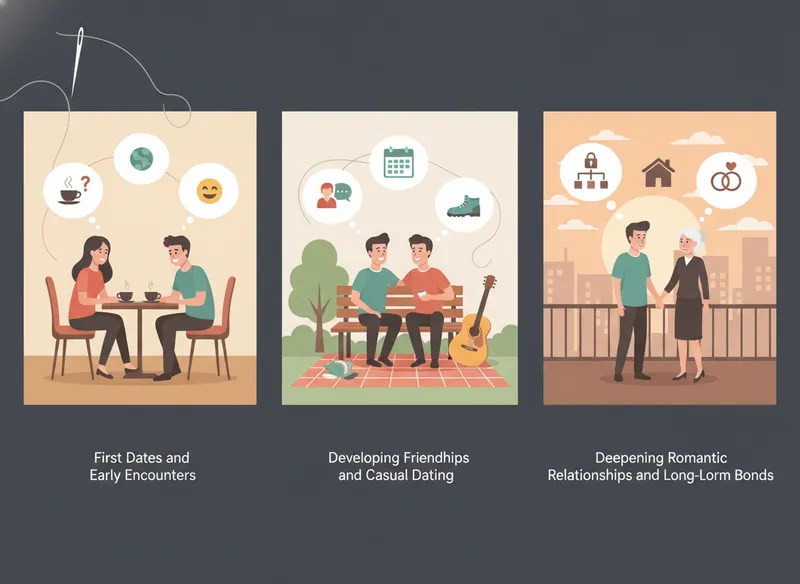
The kind of questions you ask should evolve as your relationship with someone deepens. What's appropriate for a first date might feel too intense for a casual acquaintance, and vice versa. Understanding these nuances helps build trust and ensures your conversations remain comfortable and engaging. This adaptability is key to fostering genuine connection, whether you're just getting to know someone or are in a committed partnership.
Think of it like building a house. You start with a strong foundation (early questions) and gradually add more complex structures (deeper questions) as the relationship solidifies. This gradual approach respects personal boundaries and allows for organic growth in intimacy. It’s also why apps like FEELT are designed with guided prompts that can adapt to different relationship needs, helping couples build habits of communication that grow with them.
First Dates and Early Encounters
During initial meetings, the goal is to get to know the basics and gauge initial chemistry. Questions should be light, open-ended, and focused on shared interests or common ground. The aim is to make them feel comfortable and to learn about their personality without being intrusive. Think of these as icebreakers that can lead to more. These are the foundational questions for new boyfriend that help you see if there's a spark.
- What's something you're looking forward to this week/month?
- What's your favorite way to unwind after a busy day?
- What kind of activities do you enjoy in your free time?
- Have you seen any good movies or read any interesting books lately?
- What's a place you've always wanted to visit?
Developing Friendships and Casual Dating
As you move beyond the initial stages, you can start asking questions that reveal more about their personality, perspectives, and aspirations. The focus shifts from 'what do you do?' to 'what do you think?' and 'what do you feel?' This is where you can explore their opinions, experiences, and values more deeply. These are excellent questions to ask your best friends bf to understand their character and interests beyond their connection to your friend.
- What's a cause or issue you care about deeply?
- What's a piece of advice you've received that has really stuck with you?
- What's something you're currently working on or trying to improve?
- What's your favorite part about living in [current city/area]?
- What's a dream you've had since you was a child?
Deepening Romantic Relationships and Long-Term Bonds
In established relationships, questions become more about mutual understanding, support, and shared future. They can address vulnerabilities, future plans, and deeper emotional needs. This is where conversations about \"the power of habit\" in relationships, shared goals, and emotional check-ins become vital. The goal is to foster a safe space for honest communication and continuous growth. This is where the guided prompts of FEELT truly shine, facilitating regular, meaningful conversations.
- What are your biggest dreams for our future together?
- How can I best support you when you're feeling stressed or overwhelmed?
- What's something new you'd like us to try together?
- What are your thoughts on [a significant life event, e.g., finances, career change]?
- What's one thing you appreciate most about our relationship right now?

Mastering the Art of Active Listening
Asking great questions is only half the battle; truly listening is the other, often more challenging, half. Active listening involves more than just hearing words; it's about understanding the message, the emotions, and the intent behind them. It's a skill that requires focus, empathy, and a willingness to be present. This is a cornerstone of any strong relationship and a key component of what makes FEELT's AI Therapist so valuable — it's designed to process and understand the nuances of communication.
When you listen actively, you signal to the other person that their thoughts and feelings are valued. This fosters trust and encourages them to open up further. It’s not just about waiting for your turn to speak; it’s about engaging with what the other person is sharing. "Active listening is the foundation of empathy," notes Dr. Brené Brown, a renowned researcher on vulnerability and connection. "It's about truly seeing and hearing someone."
Techniques for Effective Active Listening
- Pay Full Attention: Put away distractions (phones, laptops) and make eye contact. Focus solely on the speaker.
- Show You're Listening: Use non-verbal cues like nodding, leaning in, and mirroring their body language.
- Provide Verbal Affirmations: Use brief verbal cues like "Uh-huh," "I see," or "That makes sense" to show engagement.
- Ask Clarifying Questions: If something is unclear, ask for more detail. "Could you tell me more about that?" or "What did you mean when you said...?"
- Paraphrase and Summarize: Briefly restate what you heard in your own words to ensure understanding. "So, if I understand correctly, you're feeling..."
- Avoid Interrupting: Let the speaker finish their thoughts before you jump in with your own. Patience is key.
- Respond Thoughtfully: Once they've finished, formulate your response based on what they've shared, showing you've processed their words.
- Be Mindful of Your Own Bias: Try to listen without immediate judgment or preconceived notions. Focus on understanding their perspective.
The Role of Empathy in Conversation
Empathy is the ability to understand and share the feelings of another. When asking questions to ask guys you like, genuine empathy transforms a simple Q&A into a deeply connecting experience. It's about putting yourself in their shoes and trying to feel what they might be feeling. This emotional resonance is what builds true intimacy and understanding. As the founder of SparkToro, Rand Fishkin, states, "Understanding the user's emotional drivers is paramount to effective communication and connection."
For example, if someone shares a story about a challenge they faced, an empathetic response would acknowledge their feelings (frustration, sadness, determination) rather than just focusing on the factual outcome. This is a core principle that FEELT aims to foster by encouraging emotional check-ins. By creating a space for partners to share their moods and connection levels, the app helps build a foundation of empathy that can then be reinforced through more detailed conversations.

Examples of "Questions to Ask Guys You Like" in Action

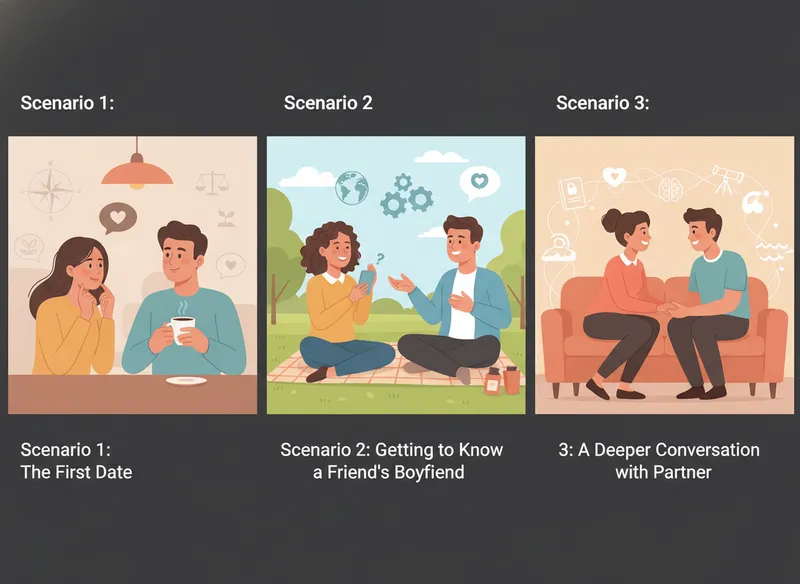
Seeing how these questions can be used in real-life scenarios can be incredibly helpful. It's not just about the words you say, but the context and the follow-up. These examples demonstrate how to weave thoughtful questions into natural conversation, whether you're on a date, chatting with a friend's boyfriend, or just getting to know someone new. They illustrate how to move from a basic question to a more profound exchange.
Let's imagine a scenario where you're on a first date and the conversation has flowed well. You want to go a little deeper. Instead of just asking \"What do you do?\", you might try a more engaging approach. This is where the power of specific, well-crafted questions truly shines. It’s about creating moments of genuine connection through dialogue. This is also why conversation card game for couples can be so effective, providing structured prompts for these very interactions.
Scenario 1: The First Date - Discovering Values
You've talked about hobbies and travel. Now, you want to understand his outlook on life. Instead of a direct, potentially heavy question, you can frame it around aspirations.
- You: 'I've been thinking a lot lately about what truly makes a life fulfilling. What does a 'successful' or 'meaningful' life look like to you?'
- He: 'That's a big question! For me, it's less about money and more about impact. I want to feel like I'm contributing something positive, and also having rich experiences with the people I care about.'
- You: 'I love that. What kind of 'positive contribution' resonates most with you? Is it through your work, volunteering, or something else?' (Follow-up question to deepen the discussion).
This exchange moves from a general idea to specific actions and motivations, revealing his core values and aspirations.
Scenario 2: Getting to Know a Friend's Boyfriend - Understanding His World
You're curious about him and want to understand his perspective. You might ask about his background or how he approaches challenges. This is a prime example of how to use questions to ask your best friends bf to build rapport.
- You: 'So, [Friend's Name] mentioned you're really into [Hobby/Interest]. What first got you interested in that?'
- He: 'Yeah, I’ve always been fascinated by [aspect of hobby]. My grandfather actually introduced me to it when I was a kid. It was one of those early experiences that just stuck.'
- You: 'That's so cool! It sounds like it has some special meaning for you. Has that influence from your grandfather shaped other parts of how you approach things?' (Follow-up question connecting past experience to present perspective).
This approach not only shows interest in his current passions but also explores the roots of those interests and their broader impact on his life.
Scenario 3: A Deeper Conversation with a Partner - Emotional Check-in
You notice your partner seems a bit distant. Instead of assuming, you create an opening for them to share. This mirrors the core function of FEELT, which is to facilitate these vital emotional check-ins.
- You: 'Hey, I've noticed you seem a little quiet today. Is everything okay? No pressure to share, but I'm here to listen if you want to talk about anything.'
- Partner: 'Yeah, I'm just feeling a bit overwhelmed with work stuff. It's been a lot lately.'
- You: 'I'm sorry to hear that. What specifically is feeling overwhelming right now? Is there anything I can do to help, or would you just like me to listen?' (Offering support and options).
This demonstrates care, offers support without being pushy, and opens the door for honest communication about feelings and needs, reinforcing \"the power of habit\" in maintaining relationship health.

Common Mistakes to Avoid When Asking Questions
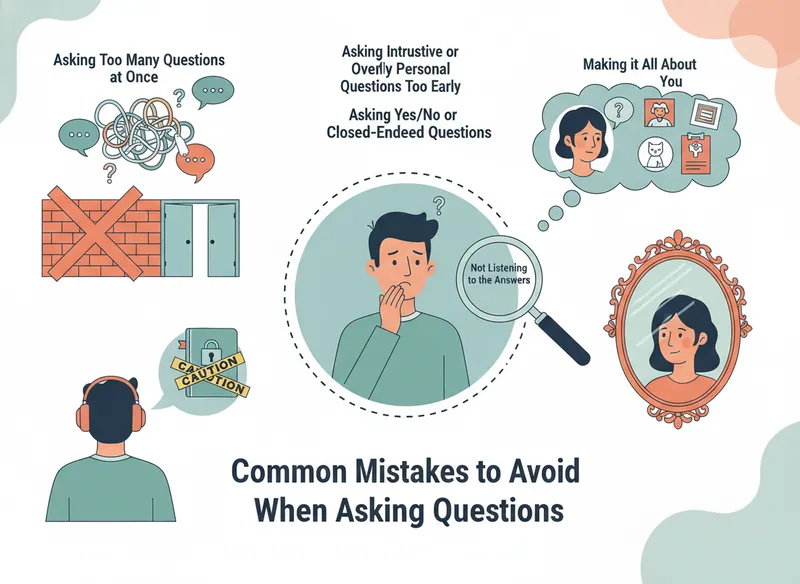
Even with the best intentions, it's easy to stumble when trying to connect through conversation. Being aware of common pitfalls can help you avoid awkwardness and ensure your questions lead to positive interactions rather than discomfort. These mistakes can hinder the development of genuine connection and trust.
Many of these mistakes stem from focusing too much on what you want to ask rather than being present and responsive to the other person. It's about balance and genuine curiosity. As a rule, always aim for an open, respectful, and engaging approach. "Don't ask questions you already know the answer to, unless it's to confirm or show you remember," advises relationship expert Dr. John Gottman.
Asking Too Many Questions at Once
Bombarding someone with a rapid-fire series of questions can feel like an interrogation rather than a conversation. It puts them on the spot and doesn't allow for thoughtful responses or follow-up dialogue. It can also make you seem more interested in getting information than in getting to know them.
- Instead: Ask one question, listen to the answer, and then respond or ask a related follow-up question.
- Focus on: Creating a natural flow of dialogue, not a checklist.
- Example: If they answer a question about a hobby, share a related experience or ask a specific detail about it, rather than immediately jumping to a new topic.
Asking Yes/No or Closed-Ended Questions
These questions shut down conversation quickly, offering little room for elaboration or personal insight. They are often the default for initial small talk but can stall deeper connection. For instance, asking \"Do you like your job?\" will likely get a \"yes\" or \"no,\" whereas \"What do you enjoy most about your work?\" invites a richer response.
- Instead: Frame questions to start with 'What,' 'How,' 'Why,' or 'Tell me about...' to encourage detailed answers.
- Focus on: Eliciting stories, opinions, and feelings.
- Example: Instead of 'Are you a morning person?', ask 'What's your typical morning routine like, and how does it set your day up?'
Asking Intrusive or Overly Personal Questions Too Early
Pushing for details about ex-partners, finances, or deeply personal traumas on a first or second meeting can be off-putting and make the other person uncomfortable. Respect personal boundaries and allow trust to build naturally before venturing into sensitive territory.
- Instead: Gauge the comfort level. Start with lighter topics and gradually move to more personal ones as the relationship progresses.
- Focus on: Respecting privacy and allowing the other person to lead on sensitive topics.
- Example: If they mention a past relationship in passing, you can acknowledge it with empathy, but avoid probing for details unless they volunteer them.
Not Listening to the Answers
This is perhaps the most critical mistake. If you're busy formulating your next question or thinking about what you'll say, you're not truly listening. This can lead to repetitive questions, missed cues, and a feeling of being unheard. It undermines the entire purpose of asking questions.
- Instead: Practice active listening techniques. Focus on understanding, not just responding.
- Focus on: Being present and engaged in the conversation.
- Example: If they mention something specific about their work, ask a follow-up question about that specific detail rather than moving to a generic topic.
Making it All About You
While sharing about yourself is important for reciprocity, constantly hijacking the conversation to talk about your own experiences can make the other person feel unheard or like a sounding board. The goal is a balanced exchange.
- Instead: Aim for a 50/50 balance in speaking time and turn-taking. Ensure your responses to their answers are relevant and add to the conversation, rather than dominating it.
- Focus on: Genuine curiosity and mutual sharing.
- Example: If they share a travel story, you can share a brief, related travel anecdote, but then steer the conversation back to their experience or ask a further question about it.

Frequently Asked Questions About Asking Guys Questions
Here are answers to some common questions people have when navigating conversations with guys they like.
What are "questions to ask guys you like" and why are they important?
"Questions to ask guys you like" are prompts designed to initiate meaningful conversations, foster understanding, and build connections. They move beyond small talk to explore personality, values, and shared experiences, laying the groundwork for a stronger relationship by revealing compatibility and fostering intimacy.
How do I tailor questions for different stages of a relationship?
For early stages, use light, open-ended questions about hobbies and interests. As trust builds, move to questions exploring values, life experiences, and perspectives. In established relationships, focus on deeper emotional needs, future plans, and mutual support, similar to guided prompts in couples apps.
What are common mistakes to avoid when asking questions?
Avoid asking too many questions at once, using only yes/no questions, asking overly personal questions too early, not listening to answers, and making the conversation all about yourself. These mistakes can hinder genuine connection and create discomfort.
What if he gives very short answers?
If he's giving short answers, he might be shy, uncomfortable, or disengaged. Try asking more open-ended questions, focus on his known interests, or share more about yourself first to encourage reciprocity. Sometimes changing the topic or topic can help.
How do I know if a question is too personal?
Observe his body language and tone. Hesitation, brief answers, changing the subject, or visible discomfort indicate a question might be too personal. Respect his boundaries and allow trust to build before venturing into sensitive territory.
Should I use conversation starters or games?
Yes, conversation starters and games like conversation starters are excellent for breaking the ice and guiding dialogue. However, use them as jumping-off points. Listen actively to the answers, ask follow-up questions, and share your own thoughts to foster a natural, engaging conversation.
Conclusion: Building Deeper Connections Through Intentional Conversation
Mastering the art of asking \"questions to ask guys you like\" is more than just a dating tactic; it's a fundamental skill for building any meaningful relationship. By moving beyond superficial chat and engaging with curiosity and empathy, you create opportunities for genuine connection, mutual understanding, and lasting bonds. Remember that the questions are simply tools; the real magic happens in the listening and the shared experience.
The journey of getting to know someone is an ongoing process, much like building strong habits. Tools like FEELT are designed to support this continuous growth by facilitating regular check-ins and fostering a culture of open communication. By consistently applying the principles of thoughtful questioning and active listening, you can transform casual acquaintances into deep friendships and nascent romances into strong, enduring partnerships.
Your Next Steps to Better Conversations
- Practice Active Listening Daily: Make a conscious effort to truly hear and understand others in all your interactions.
- Prepare a Few Go-To Questions: Keep a mental list of 2-3 open-ended questions from different categories to use when conversation lulls.
- Be Curious and Genuine: Approach every conversation with a sincere desire to learn about the other person.
- Share About Yourself: Remember that connection is a two-way street. Be willing to be vulnerable and share your own thoughts and experiences.
- Explore Relationship Tools: Consider using apps like FEELT to build consistent habits of communication and emotional check-ins within your relationships.
Strengthen Your Connections Today
Strengthen Your Relationship Today
FEELT helps couples connect deeper through meaningful conversations and AI-powered insights.
Download FEELT Free