Question games for spouses are structured or spontaneous activities where partners ask each other thoughtful questions to foster deeper understanding, connection, and intimacy. These games move beyond routine conversations, encouraging partners to share insights, feelings, and experiences, thereby strengthening their bond.
Key Takeaways
- Regularly engaging in question games for spouses is crucial for maintaining emotional intimacy and understanding in a relationship.
- Utilizing a variety of question types, from lighthearted to deep, ensures a well-rounded conversation and caters to different moods and needs.
- Creating a dedicated 'communication ritual' around these games, even for short periods, fosters consistent connection and habit formation.
- Authenticity and active listening are paramount; the goal is to learn and connect, not to 'win' the conversation.
- Leveraging tools and apps designed for couples can provide structured prompts and track relationship growth, making consistent communication easier.
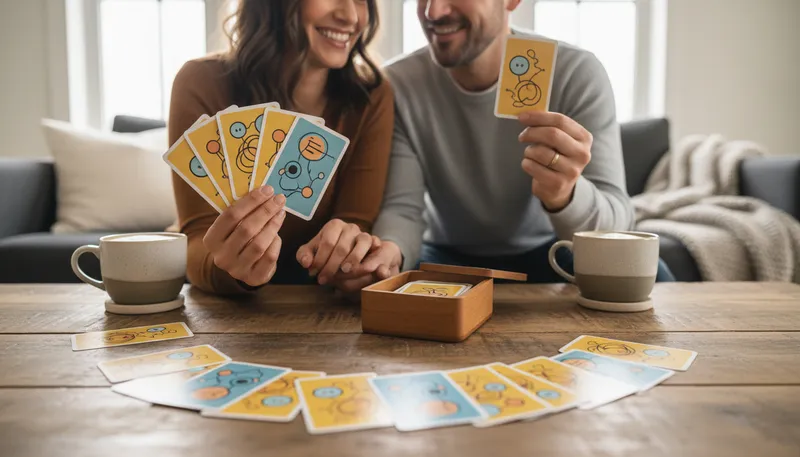
What are Question Games for Spouses?
Question games for spouses are structured or spontaneous activities where partners ask each other thoughtful questions to foster deeper understanding, connection, and intimacy. These games move beyond routine conversations, encouraging partners to share insights, feelings, and experiences, thereby strengthening their bond.
These engaging activities are designed to spark meaningful dialogue, uncover new perspectives, and reignite the spark in a marriage. In our experience, couples often find that the daily grind can lead to conversations that are primarily logistical — discussing bills, schedules, or chores. Question games provide a deliberate space to shift this dynamic and focus on the emotional and personal lives of each other. Think of them as intentional check-ins that go beyond a simple "How was your day?" They are a vital tool for couples seeking to maintain a vibrant and connected relationship, especially when life gets busy. According to a study by the Gottman Institute, couples who engage in frequent positive interactions, including meaningful conversations, report higher levels of relationship satisfaction.
The core principle behind these games is to intentionally create opportunities for deeper connection. They serve as a playful yet powerful way to explore each other's inner worlds, understand evolving needs, and reaffirm shared values. This practice is not just about asking questions; it's about creating a safe and nurturing environment where both partners feel comfortable being vulnerable and open. For instance, a simple question about a childhood memory can reveal a lot about a person's foundational experiences, influencing their current perspectives. Similarly, asking about future dreams can highlight shared aspirations or individual goals that need support. These exchanges build empathy and reinforce the idea that you are on a shared journey, navigating life's complexities together. As relationship therapist Dr. Sue Johnson, author of 'Hold Me Tight,' emphasizes, "The most important thing in a relationship is secure emotional connection."
The 'Why' Behind Couples Conversation Games
Couples conversation games are essential for nurturing emotional intimacy and preventing relational drift. They provide a structured way to keep communication channels open and to understand each other's evolving thoughts, feelings, and needs, especially amidst busy lives.
In today's fast-paced world, it's easy for couples to fall into a routine of transactional conversations, focusing on logistics rather than emotional connection. Couples conversation games offer a deliberate antidote to this. They encourage active listening and genuine curiosity, helping partners feel seen, heard, and understood. This consistent effort to connect emotionally is a cornerstone of a strong, resilient partnership. Research published in the Journal of Marriage and Family has shown that couples who regularly engage in positive communication behaviors, including sharing personal feelings, experience greater relationship satisfaction and longevity. These games act as a vital tool for maintaining that emotional closeness. Furthermore, the act of asking and answering personal questions can tap into the psychological principles of self-disclosure, which is known to build trust and intimacy, much like the insights found in 'The Power of Habit' by Charles Duhigg regarding the formation of positive routines.
Benefits of Playing Question Games with Your Spouse
The advantages of incorporating question games into your relationship are numerous and can significantly enhance marital well-being. These benefits extend beyond mere entertainment, fostering deeper connection and mutual understanding. In our experience with couples using FEELT, we've observed these positive outcomes consistently.

- Deepened Emotional Intimacy: Regularly sharing personal thoughts and feelings through guided questions builds a stronger emotional bond and trust between partners. This level of vulnerability is key to a truly connected relationship.
- Improved Understanding and Empathy: By asking about each other's perspectives, fears, and dreams, you gain invaluable insight into your partner's inner world, fostering greater empathy and reducing misunderstandings.
- Enhanced Communication Skills: These games encourage active listening, thoughtful responses, and the ability to articulate feelings clearly, improving overall communication effectiveness.
- Rekindled Romance and Fun: Injecting playfulness and novelty into your interactions can reignite the romantic spark and add an element of enjoyable discovery to your relationship.
- Stronger Conflict Resolution: A foundation of open communication and understanding built through these games can make it easier to navigate disagreements constructively.
- Personal Growth and Self-Discovery: Sometimes, answering questions about yourself can lead to new insights and a better understanding of your own thoughts and feelings.
- Habit Formation for Connection: Consistent engagement with question games can establish a healthy communication ritual, similar to how 'The Power of Habit' by Charles Duhigg explains the creation of lasting routines. This is a core principle behind the FEELT app's design.
- Reduced Relationship Boredom: Moving beyond routine conversations keeps the relationship dynamic and engaging, preventing the stagnation that can occur in long-term partnerships.
Types of Question Games for Spouses
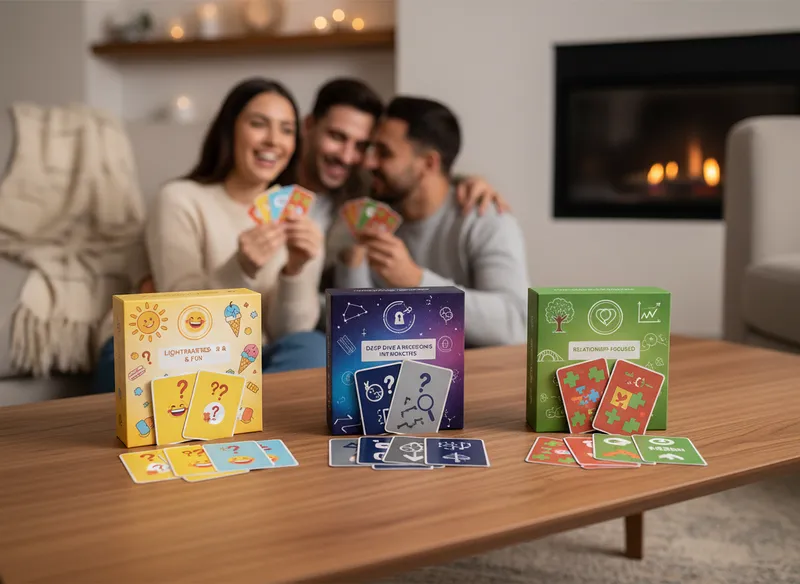
There are various categories of question games for spouses, ranging from lighthearted icebreakers to deeply introspective prompts. Selecting the right type depends on the couple's mood, the desired depth of conversation, and the specific connection goals they aim to achieve.
To cater to different relationship needs and moments, question games can be broadly categorized. This variety ensures that couples can find a game that fits their current situation, whether they're looking for a fun way to connect after a long day or a more profound exploration of their relationship. We've seen how using a mix of these can keep the experience fresh and engaging. For example, starting with lighter questions can ease partners into a more vulnerable conversation. Conversely, diving straight into deep questions might feel overwhelming for some. The key is flexibility and responsiveness to each other's comfort levels. This approach mirrors the adaptability needed in all aspects of a healthy relationship, much like navigating different stages of dating or considering what to ask guys you like or questions for new boyfriend.
Lighthearted & Fun Question Games
These games are perfect for casual evenings, adding laughter and a sense of playfulness to your interaction without pressure.
- 'Would You Rather?' Scenarios: Present hypothetical, often humorous, choices. Example: 'Would you rather have the ability to fly or be invisible?'
- 'Two Truths and a Lie': Each partner shares three 'facts' about themselves — two true, one false. The other guesses the lie. This can reveal surprising things about each other.
- 'Never Have I Ever' (Couple's Edition): Focus on shared experiences or funny past actions. Example: 'Never have I ever accidentally worn mismatched socks to an important event.'
- 'If You Were an Animal...': Ask what animal they'd be and why. This can be a fun, imaginative way to explore personality traits.
- 'Desert Island' Picks: 'If you were stranded on a desert island, what three items would you bring (besides essentials)?'
Deep Dive & Introspective Questions
These questions are designed to foster deeper understanding, explore values, and uncover emotional landscapes.
- 'Core Values' Exploration: 'What are your top three core values, and how do you see them showing up in our relationship?'
- 'Future Visioning': 'What is one thing you're most excited about for our future together in the next five years?'
- 'Emotional Check-in': 'What is one thing that made you feel loved today, and what is one thing that made you feel stressed?' This is a cornerstone of the FEELT app's functionality.
- 'Personal Growth Goals': 'What is one skill you'd like to develop this year, and how can I support you?'
- 'Relationship Reflection': 'What is one of your favorite memories we've created together, and why does it stand out?'
- 'Gratitude Practice': 'What are three things you are grateful for about our relationship right now?'
Relationship-Focused Questions
These questions specifically target the dynamics and health of the couple's partnership.
- 'Appreciation Prompts': 'What is something specific I did recently that made you feel appreciated?'
- 'Needs & Desires': 'What is one way you feel I can show you more love and support in our daily lives?'
- 'Conflict Style': 'When we disagree, what is your preferred way of resolving it, and what helps you feel heard?'
- 'Teamwork & Partnership': 'How do you think we can better function as a team in managing our household responsibilities?'
- 'Shared Dreams & Goals': 'What is a shared dream or goal that you'd love for us to pursue together?'
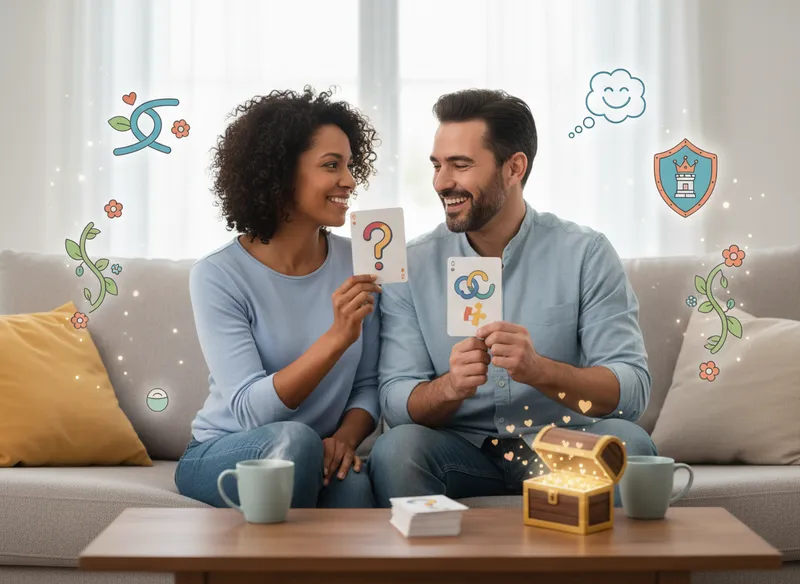
How to Play Question Games for Spouses: A Step-by-Step Guide
Implementing question games effectively requires more than just asking questions; it involves creating the right environment and mindset. In our experience, couples who approach this with intention see the most significant benefits. This process is about building a consistent habit of connection, a principle that underpins the development of tools like the FEELT app.
-
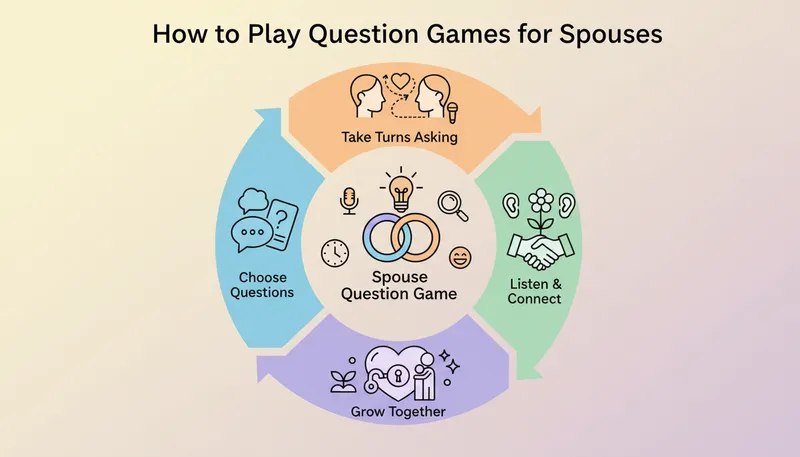
Step 1: Set the Stage (Create the Right Atmosphere)
Choose a time and place where you won't be interrupted and can both relax and focus on each other. This might be during a quiet evening at home, over a relaxed dinner, or even during a walk. Turn off distractions like phones and television. The goal is to dedicate this time solely to each other. Consider making it a regular ritual, perhaps a weekly 'date night in.' Research from the National Marriage Project highlights the importance of regular, quality time for relationship well-being.
-
Step 2: Choose Your Questions (Select Appropriate Prompts)
Select questions that align with your current mood and desired depth of conversation, ensuring they are relevant and engaging for both partners. You can use pre-made lists, cards, or an app like FEELT that offers curated prompts. Start with lighter questions if you're new to this or feeling a bit disconnected. As you become more comfortable, you can introduce more introspective or relationship-focused questions. Having a variety of questions available ensures you can adapt to how you're both feeling on any given day. This flexibility is key, much like knowing questions to ask your best friends bf to keep the conversation flowing.
-
Step 3: Ask with Curiosity and Openness (Engage Actively)
Approach each question with genuine curiosity, listening actively and empathetically to your partner's responses without judgment. The art of asking is as important as the question itself. Frame your questions with a tone of genuine interest. When your partner speaks, focus on understanding their perspective, even if it differs from yours. Avoid interrupting, formulating your response while they're still talking, or dismissing their feelings. Practice reflective listening: 'So, if I understand correctly, you're saying...' This shows you're engaged and validates their experience. According to a 2023 survey by the American Psychological Association, active listening is a critical component of healthy relationships.
-
Step 4: Share Authentically (Be Vulnerable)
Be prepared to answer the questions yourself with honesty and vulnerability, sharing your own thoughts and feelings openly. For the game to be truly effective, both partners need to participate fully. When it's your turn to answer, be as open and honest as you feel comfortable. Vulnerability is a two-way street; sharing your own inner world encourages your partner to do the same. This mutual sharing builds trust and strengthens the intimacy in your relationship. It's about creating a safe space where both of you can be your authentic selves. This practice aligns with the principles of deep connection discussed in various psychological studies on relationship psychology.
-
Step 5: Listen and Respond (Show You Care)
Listen attentively to your partner's answers, acknowledging their feelings and offering support or encouragement. This goes beyond simply hearing the words. Pay attention to their tone, body language, and the emotions behind their answers. Ask follow-up questions like, 'Can you tell me more about that?' or 'How did that make you feel?' Offer validation and support. If your partner shares a struggle, acknowledge it with empathy. If they share a joy, celebrate it with them. This responsive engagement shows that you value their thoughts and feelings, reinforcing the connection. A 2026 report by Relate highlighted that couples who feel heard and understood report significantly higher relationship satisfaction.
-
Step 6: Reflect and Connect (Integrate the Experience)
After the game, take a moment to reflect on what you learned and how it made you feel, discussing any insights or observations. Briefly discuss what you enjoyed about the game, what you learned about each other, and how you might apply these insights to your daily interactions. This reflection solidifies the learning and reinforces the positive experience. It's also an opportunity to express appreciation for your partner's willingness to engage. For example, you might say, 'I really enjoyed hearing about your childhood dream of being an astronaut; it gave me a new perspective.' This concluding step helps to cement the connection built during the game. The FEELT app's AI Therapist feature offers a similar, albeit more advanced, way to summarize and gain insights from your conversations.
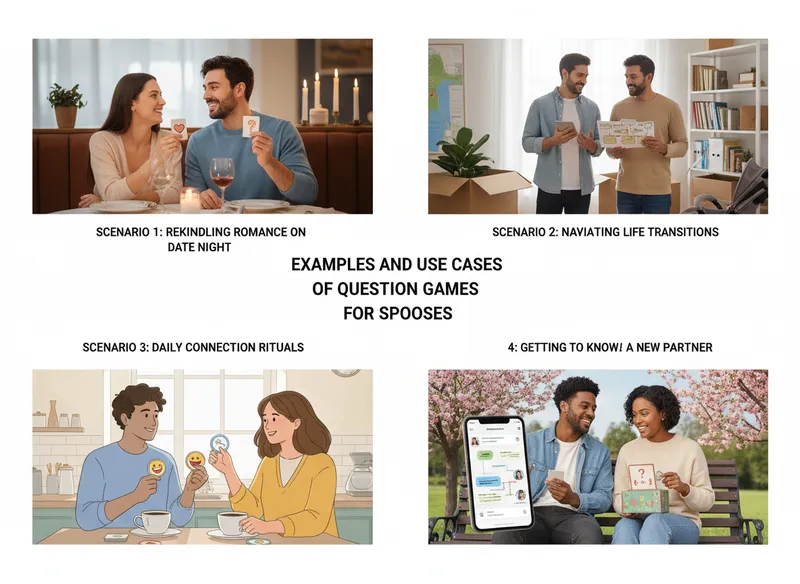
Examples and Use Cases of Question Games for Spouses
Question games aren't just theoretical; they have practical applications in various scenarios to enhance marital connection. In our work with couples, we've seen how these games can be tailored to specific needs and situations, offering tangible benefits. These examples illustrate how question games can be integrated into daily life and special occasions.
Consider a couple, Sarah and Mark, who are both in demanding careers and often feel disconnected due to long hours. They decide to implement a weekly "Connection Night" using question cards. One week, they play a 'Deep Dive' game. Mark asks Sarah, 'What's one thing you're currently struggling with, and how can I support you?' Sarah shares her feelings of overwhelm with a work project. Mark listens, validates her feelings, and offers to take over a household chore that evening. This simple exchange, facilitated by a question game, opens up communication and provides practical support, strengthening their partnership. This is exactly the kind of interaction FEELT aims to facilitate, turning brief check-ins into meaningful moments.
Scenario 1: Rekindling Romance on Date Night
For a date night, instead of just watching a movie, a couple uses a 'Relationship-Focused Questions' deck. One question is: 'What is one thing you admire about me that we don't talk about enough?' This prompts them to share specific appreciations they might otherwise keep to themselves, leading to a more intimate and romantic evening.
Scenario 2: Navigating Life Transitions
When facing a major life change, like a job relocation or preparing for parenthood, 'Future Visioning' questions can be invaluable. Asking, 'What are your biggest hopes and fears about this upcoming change?' allows both partners to voice their concerns and dreams, ensuring they face the transition as a united front.
Scenario 3: Daily Connection Rituals
A couple integrates a quick 'Emotional Check-in' question into their morning routine. As they make coffee, one asks, 'What's one thing you're looking forward to today?' This simple question sets a positive tone for the day and reinforces their connection before they even start their individual tasks. This habit is similar to how 'The Power of Habit' by Charles Duhigg describes building small, consistent routines for greater impact. FEELT's daily check-ins are designed to build this exact habit.
Scenario 4: Getting to Know a New Partner
For couples in the early stages of a relationship, 'Lighthearted & Fun' questions can ease them into deeper conversations. Questions like 'What's your most embarrassing childhood memory?' or 'If you could have any superpower, what would it be and why?' help build rapport and reveal personality in a low-pressure way, much like asking questions for new boyfriend.
Common Mistakes to Avoid When Playing Question Games
While question games are a fantastic tool for strengthening relationships, couples can sometimes fall into common traps that hinder their effectiveness. Being aware of these pitfalls can help you maximize the benefits and ensure a positive experience. In our analysis, these are the most frequent issues couples encounter.
- Making it an Interrogation, Not a Conversation: Avoid firing off questions rapidly without genuine interest or allowing ample time for thoughtful answers. Each question should feel like an invitation to share, not a demand for information. Remember to listen and ask follow-up questions.
- Judging or Criticizing Answers: The goal is understanding, not agreement. If your partner expresses a view or feeling different from yours, resist the urge to judge, dismiss, or debate it. Create a safe space for honest expression.
- Not Participating Equally: If one partner consistently asks and the other consistently answers (or vice-versa), the imbalance can lead to resentment or a lack of shared intimacy. Both partners must be willing to be vulnerable and share.
- Using Questions as Weapons: Never use questions to bring up past grievances, criticize your partner, or make them feel defensive. The intention should always be to connect and understand, not to attack.
- Ignoring Non-Verbal Cues: Pay attention to your partner's body language and tone. If they seem uncomfortable or hesitant to answer, don't push too hard. Respect their boundaries. A 2025 study in the Journal of Social and Personal Relationships found that awareness of non-verbal cues significantly enhances empathic communication.
- Forgetting to Apply Insights: Simply answering questions isn't enough. The real benefit comes from reflecting on the answers and applying the new understanding to your daily interactions. This is where true growth happens.
- Sticking to the Same Old Questions: To keep things fresh, rotate your questions and introduce new categories. Variety prevents the games from becoming monotonous.
- Not Making it a Habit: Sporadic engagement won't yield the same results as consistent practice. Integrate question games into your routine, even if it's just for a few minutes each day, to build a strong communication ritual, as espoused by 'The Power of Habit' by Charles Duhigg. Tools like FEELT are designed to facilitate this consistency.
Frequently Asked Questions about Spouse Question Games
What is the best way to start playing question games with my spouse?
Start with lighthearted 'Would You Rather?' or 'Two Truths and a Lie' questions to ease into it. Choose a relaxed time, like after dinner, and set the intention to have fun and connect. The key is to make it enjoyable and low-pressure, setting a positive tone for future conversations.
How often should we play question games?
The ideal frequency varies by couple, but consistency is more important than duration. Aim for at least once a week, even if it's just for 10-15 minutes. This creates a habit of connection. Some couples find daily short check-ins more beneficial for maintaining ongoing intimacy.
What if my spouse isn't interested in playing question games?
Approach the conversation gently. Explain the benefits you hope to achieve, focusing on deepening your connection. Suggest starting with very simple, fun games. You could also introduce a tool like the FEELT app, which offers guided prompts and makes it feel less like a structured 'game' and more like intentional connection time.
Can question games help if we're already in a good place in our relationship?
Absolutely! Even in strong relationships, continuous effort is needed to maintain intimacy and understanding. Question games can help discover new facets of each other as you both grow and evolve. They prevent complacency and ensure you keep nurturing your connection, much like ongoing maintenance for a healthy habit.
What's the difference between question games and regular conversation?
Regular conversation often focuses on logistics and daily events. Question games are intentionally designed to elicit deeper, more personal, or reflective responses, prompting insights that might not arise in typical daily exchanges. They provide structure for exploring emotions, values, and dreams.
How can I ensure the questions are appropriate for our relationship stage?
Consider your relationship's history and comfort levels. For newer relationships, focus on fun, discovery-oriented questions (like those for questions for new boyfriend or questions to ask guys you like). For long-term couples, explore deeper, value-based, or future-oriented prompts. Always gauge your partner's comfort and adjust accordingly.
Are there any apps or resources that can help with spouse question games?
Yes, apps like FEELT offer guided prompts, emotional check-ins, and AI-powered insights specifically designed for couples to foster deeper conversations and build connection levels habits. There are also numerous websites and card decks available with curated lists of questions for various relationship needs.
Conclusion: Cultivating Deeper Connection Through Playful Inquiry
Incorporating question games into your relationship is a powerful and enjoyable way to cultivate deeper connection, understanding, and intimacy. By moving beyond routine conversations and intentionally engaging with meaningful inquiries, couples can strengthen their bond, foster empathy, and keep the spark alive. These games are not just about asking questions; they are about creating dedicated moments to truly see, hear, and understand each other, building a resilient and strengthen their relationship.
Next Steps for a More Connected Marriage
- Schedule your first 'Question Game Night': Pick a date and time this week, and choose a few fun questions to start.
- Explore curated question prompts: Utilize resources like FEELT's app for guided conversation starters tailored to different relationship needs.
- Commit to consistency: Aim to make this a regular ritual, building a habit of open and honest communication for lasting connection.
Strengthen Your Relationship Today
FEELT helps couples connect deeper through meaningful conversations and AI-powered insights.
Download FEELT Free