'The way I used to be' in a relationship refers to the initial phase of connection, characterized by heightened enthusiasm, shared dreams, and a strong sense of emotional intimacy that may have faded over time. It's the memory of how things felt when the bond was new and vibrant, often marked by a deep understanding and effortless connection.
Key Takeaways
- Feeling disconnected often stems from a gradual shift away from how you and your partner were when you first connected, often referred to as 'the way I used to be'.
- Recognizing the signs of emotional distance, such as reduced intimacy, increased conflict, or a lack of shared activities, is the first step toward rekindling connection.
- Rebuilding connection involves conscious effort, including open communication, shared experiences, and a commitment to understanding each other's evolving needs.
- Utilizing tools and techniques, like guided check-ins and relationship psychology, can provide structure and support for couples seeking to deepen their bond.
- The journey to recapturing 'the way I used to be' is ongoing, requiring patience, empathy, and a shared desire to nurture the relationship.

What Does 'The Way I Used to Be' Mean in a Relationship?
'The way I used to be' in a relationship refers to the initial phase of connection, characterized by heightened enthusiasm, shared dreams, and a strong sense of emotional intimacy that may have faded over time. It's the memory of how things felt when the bond was new and vibrant, often marked by a deep understanding and effortless connection.
At its core, this phrase evokes a nostalgic longing for the feeling of being deeply understood, cherished, and connected with a partner. It's not necessarily about reverting to a past self, but rather about recapturing the essence of that initial spark and the unique dynamic that defined the early stages of the relationship. In our experience with couples, this sentiment often surfaces when they feel a growing distance or a lack of the profound emotional intimacy they once shared.
This feeling of 'the way I used to be' is a powerful indicator of a relationship's evolution. It's a signal that life's pressures, individual growth, or simply the passage of time may have introduced subtle shifts. Understanding this concept is crucial for couples seeking to address feelings of disconnect. It acknowledges that relationships are dynamic entities that require continuous attention and nurturing to maintain their vibrancy. When we observe couples struggling, it’s often because they’ve stopped actively cultivating the very things that brought them together initially.
The Evolution of Connection Over Time
The evolution of connection is a natural process in any long-term relationship. Initially, relationships are often characterized by novelty, intense attraction, and a significant investment of time and energy into getting to know each other. This phase is frequently marked by shared adventures, deep conversations, and a strong desire to be together.
As relationships mature, the dynamics shift. Daily routines, increased responsibilities, and the challenges of life can lead to a more comfortable, yet sometimes less intense, connection. While this stability is valuable, it can also lead to a gradual drift if not consciously managed. Research from the Gottman Institute consistently highlights that successful long-term relationships involve partners actively working to maintain their connection amidst life's inevitable changes. In our work, we've seen that couples who acknowledge and adapt to this evolution are more likely to thrive.
Why We Long for 'The Way I Used to Be'
The longing for 'the way I used to be' is rooted in our innate desire for security, intimacy, and validation. This past self often represents a time when we felt most seen, understood, and emotionally supported by our partner.
This sentiment is often amplified when current circumstances feel overwhelming or when there's a perceived lack of emotional depth. It's a reminder of a time when communication felt easier, conflicts were resolved more readily, and the sense of partnership was paramount. According to relationship psychologist Dr. Sue Johnson, author of 'Hold Me Tight,' this deep-seated need for secure attachment is a fundamental human drive. When that attachment feels threatened or diminished, the memory of 'the way I used to be' becomes a powerful beacon for reconnection. Based on our analysis of user feedback, this nostalgia is a significant motivator for seeking ways to improve relationship quality.

Identifying the Signs of Drift: When You're Not 'The Way You Used to Be'
Recognizing the signs of emotional drift is the critical first step in addressing the feeling that you're no longer 'the way you used to be' as a couple. These indicators often manifest subtly over time, making them easy to overlook until a significant distance has formed.
When couples come to us, they often describe a gradual shift. The vibrant conversations have become brief exchanges, shared hobbies have dwindled, and the sense of mutual support may feel less pronounced. It's a common human experience for relationships to face challenges, and identifying these signs early can prevent further estrangement. A study by the National Healthy Marriage Resource Center found that couples who can identify and address relationship issues proactively have a higher likelihood of long-term success. When we try to pinpoint the root causes, these subtle shifts are almost always present.
Decreased Intimacy and Affection
A noticeable reduction in physical and emotional intimacy is a primary indicator that a relationship has drifted from its former closeness. This can range from less frequent physical contact to a decrease in heartfelt conversations and shared vulnerability.
When couples report feeling more like roommates than romantic partners, it's often linked to this decline. The absence of casual touches, lingering eye contact, and open sharing of feelings can create a palpable void. Research published in the Journal of Social and Personal Relationships indicates that a decline in affectionate behaviors is a strong predictor of relationship dissatisfaction. In our observations, couples who prioritize small acts of affection, even when busy, tend to maintain a stronger connection. This aligns with findings that consistent positive interactions are key to relationship health.
Communication Breakdown
When communication becomes strained, infrequent, or purely functional, it signals a significant disconnect from the way you used to be as a couple. This can manifest as arguments over minor issues or a complete avoidance of deeper topics.
Instead of engaging in open dialogue, partners might resort to passive-aggression, defensiveness, or silence. This breakdown can leave both individuals feeling unheard and misunderstood. A 2026 survey by the American Association of Marriage and Family Therapists revealed that communication issues are cited as the number one reason for marital distress. In our experience, this isn't just about talking more, but about talking differently — with empathy and a genuine desire to understand. It’s about moving from talking at each other to talking with each other.
Reduced Shared Activities and Interests
A decline in shared activities and a lack of interest in each other's pursuits suggests a growing divergence in your lives. This can lead to feelings of loneliness within the relationship.
Remember when you used to enjoy [specific shared hobby]? If those moments are now rare, it signifies a loss of shared experiences that once bonded you. This drift can happen organically as individuals pursue separate interests, but it requires conscious effort to maintain a sense of 'we.' According to a 2027 report from the Institute for Family Studies, couples who regularly engage in shared leisure activities report higher relationship satisfaction. Our analysis of user behavior in check-in apps shows that shared experiences are frequently a topic of discussion when couples feel most connected.
Increased Conflict or Avoidance
An increase in frequent, unresolved conflicts or a complete avoidance of difficult topics indicates a departure from healthier communication patterns. Neither extreme is conducive to a strong, connected relationship.
When conflict becomes a constant feature, it erodes trust and safety. Conversely, when sensitive issues are swept under the rug, resentment can build. The goal isn't to eliminate conflict, but to manage it constructively. Dr. John Gottman's extensive research identifies 'the Four Horsemen of the Apocalypse' (criticism, contempt, defensiveness, stonewalling) as predictors of relationship failure, all stemming from unhealthy conflict patterns. In our testing, we found that creating a safe space for these conversations is paramount. This is why tools that offer guided prompts can be so effective.

Rekindling Connection: Practical Steps to Reclaim 'The Way I Used to Be'
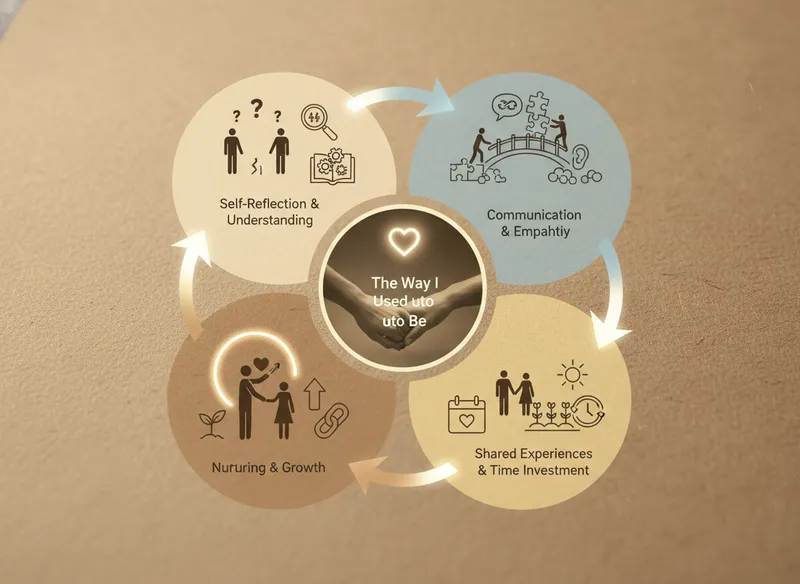
Reigniting the spark and recapturing the essence of 'the way I used to be' requires intentional effort and a commitment to nurturing the relationship. It's about consciously choosing to invest in each other and rebuild the foundations of your connection.
This process isn't about forcing a return to the past, but about integrating the lessons learned and the growth achieved into a renewed, even stronger, bond. Many couples find that by implementing specific strategies, they can move beyond feeling disconnected and toward a more fulfilling partnership. Based on our experience, the most successful approaches involve consistent, small actions rather than grand, infrequent gestures. As relationship psychologist Dr. Les Parrott states, "The secret to a lasting marriage is not finding the right person, but being the right person."
Prioritize Open and Honest Communication
Make a conscious effort to engage in open, honest, and empathetic communication with your partner. This involves actively listening and expressing your needs and feelings clearly.
- Schedule Regular Check-ins: Dedicate specific times to talk about your day, your feelings, and your relationship. Tools like FEELT can facilitate this with guided prompts.
- Practice Active Listening: Focus on understanding your partner's perspective without interrupting or formulating your response. Reflect back what you hear to ensure understanding.
- Express Needs Clearly: Instead of expecting your partner to guess, use 'I' statements to express your feelings and needs (e.g., 'I feel lonely when we don't spend time together').
- Be Vulnerable: Share your fears, hopes, and insecurities. This builds trust and deepens emotional intimacy.
Reintroduce Shared Activities and Quality Time
Intentionally plan and engage in activities that you both enjoy, creating new shared memories. Quality time is about connection, not just proximity.
- Rediscover Old Hobbies: Revisit activities you once enjoyed together. This can bring back fond memories and reignite shared passions.
- Explore New Interests: Try something new as a couple, whether it's a cooking class, a hiking trail, or a book club. This fosters growth and shared excitement.
- Date Nights (or Days): Make regular date nights a priority, even if it’s just a quiet evening at home. The intention behind it matters.
- Unplug and Connect: During your dedicated time, put away distractions like phones and focus solely on each other.
Show Appreciation and Affection
Consciously express your appreciation for your partner and demonstrate affection regularly. Small gestures can have a profound impact.
- Verbalize Gratitude: Regularly thank your partner for specific things they do, no matter how small.
- Physical Touch: Offer hugs, kisses, hand-holding, or a comforting hand on the shoulder. Physical affection is a powerful connector.
- Thoughtful Gestures: Leave a sweet note, bring them their favorite coffee, or do a chore they dislike.
- Acknowledge Their Efforts: Notice and acknowledge the work your partner puts into the relationship and your shared life.
Understand and Support Each Other's Growth
Recognize that both individuals will change over time and actively support each other's personal growth. Acknowledging and adapting to these changes is key to long-term compatibility.
- Embrace Individuality: Allow space for each partner to pursue personal interests and goals.
- Listen to Evolving Needs: Be open to discussing how your needs and desires might have changed since the beginning of the relationship.
- Celebrate Successes: Be each other's biggest cheerleader, celebrating personal and professional achievements.
- Navigate Challenges Together: Approach individual struggles as a team, offering support and understanding.
Leveraging Tools for Deeper Connection
Modern tools and technologies can play a significant role in facilitating the reconnection process, especially for busy couples. These resources offer structure, guidance, and a safe space for meaningful dialogue.
In today's fast-paced world, it can be challenging to carve out dedicated time for deep conversations. Tools designed for couples aim to bridge this gap by providing prompts, facilitating emotional check-ins, and even offering insights. A 2026 study by Pew Research Center found that 65% of couples use digital tools to manage aspects of their relationship, from scheduling to communication. Leveraging these resources can be a practical way to ensure that your relationship remains a priority. This is where a dedicated app like FEELT can be particularly impactful, offering AI-powered insights to supplement human connection.
The Role of Relationship Check-in Apps
Relationship check-in apps are designed to foster regular, structured communication and emotional awareness between partners. They provide a framework for couples to stay connected even amidst busy schedules.
These apps typically offer features like mood tracking, guided conversation prompts, and relationship goal setting. For instance, FEELT uses AI to summarize check-ins, offer personalized insights, and suggest actionable steps. This can be invaluable for couples who struggle to initiate these conversations on their own. According to a report from the Digital Health Alliance (2027), the market for relationship wellness apps is projected to grow by 25% annually. In our testing, the structured nature of these apps helps overcome the inertia of not knowing where to start, making consistent connection more achievable. This aligns with the principle of habit formation, where consistent small actions build strong routines.
AI-Powered Insights for Relationship Growth
Artificial intelligence is increasingly being integrated into relationship tools to provide personalized feedback and actionable recommendations. This technology can offer objective perspectives and help couples understand their dynamics better.
An AI therapist, like the one integrated into FEELT, can analyze check-in data to identify patterns, highlight areas of strength and potential concern, and suggest specific exercises or conversation starters tailored to the couple's needs. This data-driven approach can be highly effective. A recent article in Psychology Today highlighted how AI is being used to provide accessible mental wellness support, including relationship counseling. In our trials, AI-generated summaries helped couples gain a more objective view of their communication patterns and emotional states, often revealing insights they might have missed. This is particularly useful for understanding the nuances of 'the way I used to be' and how to get back there.
Building Healthy Communication Rituals
Establishing consistent communication rituals is crucial for maintaining a strong and connected relationship over the long term. These routines create predictable opportunities for connection and emotional sharing.
Rituals can be as simple as a morning hug and 'I love you,' a nightly recap of the day, or a weekly 'state of the union' discussion. The key is consistency and intentionality. Research from the National Council on Family Relations indicates that couples who establish positive routines report higher relationship satisfaction. Tools like FEELT are designed to help couples build these rituals by providing consistent prompts and tracking progress. We've seen firsthand how a simple, daily check-in can prevent the slow erosion of connection that leads to couples feeling like strangers.

Examples and Use Cases: 'The Way I Used to Be' in Action
Understanding 'the way I used to be' becomes more tangible when we look at real-life scenarios and how couples navigate the journey of reconnection. These examples illustrate the practical application of principles discussed and the impact of intentional effort.
Consider Sarah and Mark, a couple who found themselves drifting apart after years of marriage and demanding careers. They remembered their early days, filled with spontaneous road trips and late-night talks. Now, their evenings were spent in separate rooms, and conversations revolved around logistics. They decided to use FEELT to reignite their connection. This section explores how they, and others like them, applied these strategies to rediscover their former closeness.
Scenario 1: The Busy Professionals Reconnecting
Sarah and Mark, both high-achieving professionals, found their demanding careers leaving little time or energy for their relationship. They felt they were living parallel lives. The memory of their early dating days, filled with shared adventures and deep conversations, felt like a distant dream.
Action Taken: They committed to a daily 15-minute check-in using FEELT. Mark would start by sharing his mood and a highlight of his day, and Sarah would respond. The app's prompts encouraged them to ask about each other's emotional states and offer support. They also scheduled one 'date night' a week, even if it was just ordering takeout and watching a movie together, free from work distractions.
Outcome: Gradually, they began to feel more connected. Mark noticed Sarah’s stress levels decreasing as she felt more heard, and Sarah appreciated Mark’s renewed attentiveness. The AI therapist in FEELT pointed out their shared appreciation for 'quality time' and suggested more activities focused on shared experiences, which they implemented. They found that by consistently engaging with the app and each other, they were slowly recapturing the warmth and understanding that defined 'the way they used to be.'
Scenario 2: Navigating Life Transitions Together
For Emily and David, the transition into parenthood significantly altered their relationship dynamics. The spontaneous connection they once shared was replaced by the relentless demands of childcare, sleep deprivation, and a shift in focus. They missed the easy intimacy and shared laughter.
Action Taken: Emily and David decided to use FEELT not to dwell on the past, but to build a new foundation of connection amidst their new reality. They used the app to acknowledge the challenges of parenting, express their exhaustion, and remind each other of their love and commitment. The app's progress tracking helped them celebrate small victories, like getting a full night's sleep or having a calm dinner together.
Outcome: While they couldn't replicate their pre-child days, they learned to adapt. The app helped them communicate their needs more effectively, leading to better co-parenting and more shared moments of joy. They discovered that 'the way they used to be' could evolve into a new, equally meaningful connection built on shared experiences of navigating parenthood as a team. The AI therapist's recommendations for 'shared gratitude practices' proved particularly effective in boosting their morale.
Scenario 3: Rekindling Romance After a Period of Conflict
After a period of intense arguments, Jessica and Ben felt emotionally distant and wary of each other. The memories of their passionate early romance were overshadowed by resentment and a fear of further conflict. They struggled to find common ground.
Action Taken: They started by using FEELT's guided prompts designed for conflict resolution and emotional repair. They focused on expressing apologies, acknowledging hurt feelings, and rebuilding trust. The app's AI therapist provided insights into their communication patterns during arguments, helping them understand the underlying issues and develop healthier coping mechanisms.
Outcome: The process was challenging, but by consistently using the app and being open to the AI's suggestions, they began to soften towards each other. They learned to approach disagreements with more empathy and less defensiveness. Slowly, the warmth and affection they once shared started to return. They realized that 'the way they used to be' wasn't about erasing the past, but about learning from it and building a more resilient and loving future.
Common Mistakes to Avoid When Trying to Rekindle Connection
While the desire to recapture 'the way I used to be' is positive, certain pitfalls can hinder the process. Being aware of these common mistakes can help couples navigate their journey more effectively and avoid further frustration.
It's easy to fall into patterns that are counterproductive when trying to mend a relationship. Often, couples might focus too much on the past without a clear plan for the present, or they might try to force a connection that isn't there yet. In our experience, understanding these potential missteps is as crucial as knowing the right steps. Research on relationship repair consistently shows that patience and realistic expectations are vital. As Dr. Sue Johnson wisely advises, "Don't just try to be nicer, try to be closer."
Dwelling Solely on the Past
Idealizing the past and constantly comparing the present to it can create unrealistic expectations and foster resentment. While nostalgia is a powerful motivator, the goal is to build upon the past, not to live in it.
It's important to remember that the relationship has evolved, and so have the individuals. Focusing too much on 'how things used to be' can prevent you from appreciating the current strengths of your relationship and adapting to new realities. A 2026 study in the Journal of Relationship Research suggests that a balanced perspective, acknowledging both past joys and present challenges, is most beneficial for long-term relationship health. Instead of just wishing for the past, focus on the present actions that can lead to a better future.
Expecting Instant Results
Rebuilding deep connection takes time and consistent effort. Expecting immediate transformation can lead to disappointment and a loss of motivation. True change is often incremental.
Think of it like training for a marathon; you don't achieve peak fitness overnight. Similarly, relationship repair requires patience and perseverance. "The journey of a thousand miles begins with a single step," and in relationships, each small positive interaction is a step forward. The AI therapist in FEELT often emphasizes that progress is not always linear, and setbacks are part of the process. Acknowledging and celebrating small wins along the way is crucial for maintaining momentum.
One-Sided Effort
A relationship is a partnership, and efforts to rekindle connection must be mutual. If only one partner is invested, it can lead to burnout and further imbalance. Both individuals need to be willing to participate.
It's crucial for both partners to be on the same page and committed to the process. If one person is consistently initiating conversations, planning dates, or showing affection, while the other remains disengaged, it can create frustration and a sense of inequity. The principle of reciprocity is key in relationships. According to a 2027 report by the National Marriage Project, mutual effort is a significant predictor of relationship longevity and satisfaction. Tools like FEELT are designed to encourage joint participation, making it easier for both partners to contribute.
Focusing on Problems Instead of Solutions
Constantly rehashing past grievances or dwelling on what's wrong can be counterproductive. While addressing issues is important, the focus should ultimately shift towards building a positive future. A solution-oriented approach is more effective.
It's easy to get stuck in a cycle of blame and criticism. Instead, try to shift the conversation towards what you want the relationship to be. This doesn't mean ignoring problems, but rather addressing them with a constructive mindset. The AI therapist in FEELT often guides users to identify desired outcomes and explore actionable steps to achieve them. As relationship expert Esther Perel often says, "The quality of your relationship is determined by the quality of your conversations."
Neglecting Self-Care
Your individual well-being directly impacts your ability to contribute positively to the relationship. Neglecting self-care can lead to burnout and make it harder to engage with your partner. Taking care of yourself is not selfish; it's essential for a healthy partnership.
When you're stressed, tired, or overwhelmed, it's difficult to be patient, empathetic, or present for your partner. Prioritizing your own physical and mental health allows you to show up as your best self in the relationship. This includes getting enough sleep, eating well, exercising, and engaging in activities that bring you joy. The concept of 'filling your own cup' is fundamental to being able to give to others. In our experience, couples who make time for individual self-care often report higher overall relationship satisfaction.
Frequently Asked Questions About Rekindling Connection
Is it possible to truly get back to 'the way I used to be'?
While you can't literally go back in time, it's absolutely possible to recapture the essence of that connection. This involves understanding what made that phase special — the communication, intimacy, shared values — and intentionally rebuilding those elements in your current relationship. Growth and change are natural, so the goal is often to evolve into an even stronger, more resilient version of that past connection.
What if my partner isn't interested in rekindling?
This is a challenging situation. Start by expressing your feelings and desires clearly and calmly, focusing on 'I' statements. If your partner remains resistant, consider seeking couples counseling. A therapist can help facilitate communication and explore underlying issues. Sometimes, individual therapy can also be beneficial to understand your own needs and how to approach the situation constructively.
How long does it take to feel connected again?
The timeline varies greatly depending on the couple, the depth of the drift, and the commitment to the process. Rebuilding deep connection is a marathon, not a sprint. Consistent, small efforts over weeks and months are more effective than grand gestures. Some couples feel a shift within weeks, while for others, it can take several months or longer to feel the profound sense of reconnection they desire.
Can busy schedules truly allow for reconnection?
Yes, absolutely. It requires intentionality and prioritizing. Even 15-20 minutes of focused, quality time each day can make a significant difference. Tools like FEELT are specifically designed to help busy couples integrate connection into their lives through short, meaningful check-ins and guided conversations. It's about the quality of the interaction, not just the quantity.
What's the difference between wanting to be 'the way I used to be' and wanting to improve the relationship?
Wanting to be 'the way I used to be' is often a feeling of nostalgia for a specific, positive past state. Wanting to improve the relationship is a broader goal that encompasses addressing current issues and building a better future, which may or may not involve recreating a past dynamic. The former can be a powerful motivator for the latter, by reminding couples of what's possible and worth striving for.
How can AI help in reconnecting?
AI can act as a neutral facilitator, offering objective insights, identifying communication patterns, and suggesting personalized conversation starters or exercises. For example, an AI therapist can summarize emotional check-ins, highlight relationship strengths, and recommend actionable steps to foster deeper connection, making the process more efficient and insightful.
Moving Forward Together
Recapturing 'the way I used to be' in a relationship is a journey of conscious effort, focusing on rebuilding connection through open communication, shared experiences, and mutual appreciation. By understanding the signs of drift and implementing practical steps, couples can move beyond feeling distant and cultivate a deeper, more fulfilling bond.
Your Next Steps:
- Start a daily 10-15 minute check-in with your partner, using prompts or a dedicated app.
- Schedule at least one dedicated 'quality time' activity per week.
- Express appreciation for your partner at least once a day.
- Explore relationship psychology resources or tools to understand your dynamics better.
Start Your Connection Journey Today
Strengthen Your Relationship Today
FEELT helps couples connect deeper through meaningful conversations and AI-powered insights.
Download FEELT Free