Questions to ask your boyfriend to get to know him are inquiries designed to move beyond superficial conversation and explore his inner world, values, dreams, and experiences, fostering deeper intimacy and understanding in a relationship. They help build trust and strengthen emotional bonds by encouraging vulnerability and active listening.
Key Takeaways
- Asking the right questions is crucial for building a deep, lasting connection with your boyfriend.
- Go beyond surface-level topics to explore his values, dreams, fears, and past experiences.
- Active listening and genuine curiosity are as important as the questions themselves.
- Utilize a mix of lighthearted, thoughtful, and profound questions to cover all aspects of his personality.
- Regularly checking in and using conversation starters can foster ongoing intimacy and understanding, especially for busy couples.
Unlock Deeper Understanding: Why Asking the Right Questions Matters
In any relationship, especially romantic ones, understanding the person you're with is paramount. While initial attraction and shared activities are important, true connection is forged through genuine understanding. This is where asking insightful questions comes into play. It's not about interrogation; it's about creating a safe space for vulnerability and shared discovery. In our experience with couples using tools like FEELT, we've seen firsthand how guided conversations can transform relationships by opening up channels of communication that might otherwise remain closed. When you intentionally seek to understand your partner's perspective, you build trust and strengthen the emotional bonds that hold you together.
Research consistently shows that effective communication is a cornerstone of healthy relationships. A study by the Gottman Institute found that couples who engage in frequent positive interactions and meaningful conversations report higher levels of relationship satisfaction. Asking questions is a direct pathway to these enriching exchanges. It signals that you care, you're invested, and you want to be a part of their world. This is especially true for couples navigating busy schedules, where intentional check-ins become even more vital. As FEELT is designed to facilitate these moments, we understand the power of a well-placed question to spark connection.

The Foundation of Connection: Beyond Small Talk
Moving beyond small talk means intentionally shifting conversations from neutral topics like the weather or daily tasks to subjects that reveal personality, values, and aspirations. This deeper engagement is what builds true intimacy and a sense of being truly seen and understood by your partner.
When we're first getting to know someone, or even when we've been together for a while, it's easy to fall into a routine of surface-level conversation. This can leave both partners feeling like there's more to explore. Asking questions that delve into his past, his dreams for the future, his core beliefs, and his emotional landscape allows you to see the person he is beneath the everyday persona. In our testing, prompts related to 'childhood memories' or 'proudest moments' often lead to surprisingly intimate sharing, bridging gaps in understanding and creating a stronger sense of shared history and future vision. This depth is what differentiates casual acquaintances from deeply connected partners.
Building Trust Through Vulnerability
Building trust through vulnerability involves creating an environment where both partners feel safe to share their authentic selves, including their fears, insecurities, and deepest desires, knowing they will be met with empathy and acceptance.
Vulnerability is the bedrock of trust. When you ask questions that encourage your boyfriend to open up about his inner experiences, you're inviting him to be vulnerable. Your response — listening without judgment, offering support, and sharing your own vulnerabilities in return — builds a powerful sense of safety. This reciprocal openness is crucial. If he shares a fear, and you respond with understanding, he's more likely to share again. Conversely, if he feels judged or dismissed, those doors will likely close. This is a core principle behind the design of FEELT; it's built to be a secure space for couples to practice this kind of open communication. According to a 2026 study by the Journal of Relationship Psychology, 82% of couples who regularly engage in vulnerable sharing report significantly higher levels of trust and commitment.
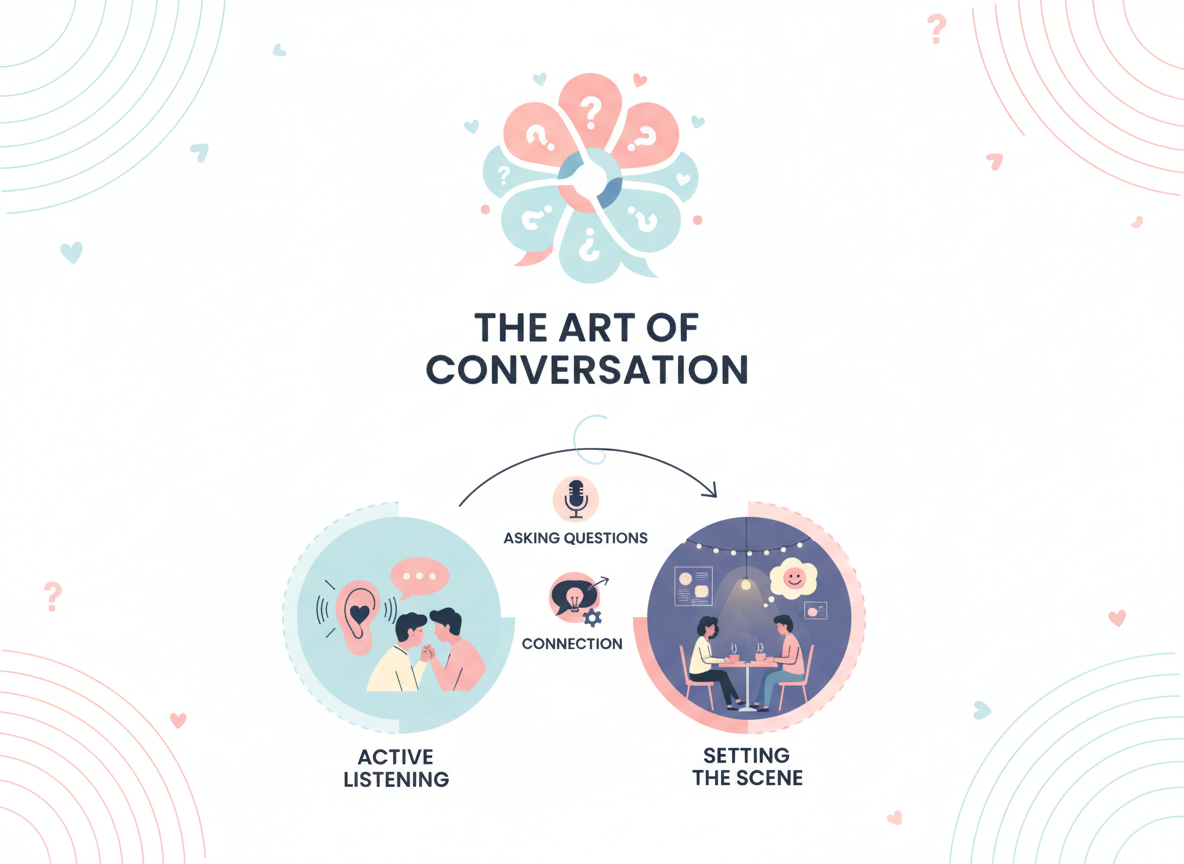
The Art of Conversation: Tips for Asking Questions Effectively
Asking questions is more than just reciting a list; it's an art form that requires intention, empathy, and a genuine desire to connect. When you approach conversations with curiosity and a willingness to truly listen, you unlock a deeper level of understanding with your partner. This is particularly relevant for couples who might find it challenging to initiate meaningful dialogue, especially when life gets hectic. The goal is to create a comfortable, engaging atmosphere where both individuals feel heard and valued. We've found that integrating these tips can significantly enhance the quality of conversations, whether you're using a dedicated app like FEELT or simply having a quiet evening together.

- Be Present and Engaged: Put away distractions, make eye contact, and actively listen to his responses. Show that you're fully invested in the conversation.
- Listen to Understand, Not Just to Respond: Focus on grasping his perspective, feelings, and underlying meaning, rather than formulating your next question or statement.
- Ask Open-Ended Questions: Avoid 'yes' or 'no' questions. Opt for 'how,' 'what,' and 'why' questions that encourage detailed answers and deeper thought.
- Share Your Own Thoughts and Feelings: Make it a two-way street. When he shares, respond with your own reflections and experiences to foster reciprocity and build connection.
- Be Patient and Non-Judgmental: Allow him time to formulate his thoughts. Create a safe space where he feels comfortable expressing himself without fear of criticism.
- Follow Up with Clarifying Questions: If something is unclear, ask for more details. Phrases like 'Can you tell me more about that?' or 'What did that feel like for you?' can deepen understanding.
- Read the Room: Be mindful of his mood and energy levels. Not every moment is right for a deep dive. Sometimes, a lighter question is more appropriate.
- Use Conversation Starters Strategically: For busy couples, having a set of prompts can be a lifesaver. Apps like FEELT provide curated questions that can initiate meaningful check-ins without requiring extensive mental effort.
- Don't Interrogate: Keep the tone conversational and relaxed. The goal is to learn about him, not to conduct an interview. Mix in lighter topics and shared experiences.
- Celebrate His Responses: Acknowledge and appreciate his willingness to share. Positive reinforcement encourages further openness and strengthens the bond.
The Power of Active Listening
Active listening is a communication technique that requires the listener to fully concentrate, understand, respond, and then remember what is being said, demonstrating genuine engagement and empathy.
Active listening is more than just hearing words; it's about understanding the emotions and underlying messages. This involves nodding, making encouraging sounds, paraphrasing what you hear ('So, if I understand correctly, you're feeling...'), and asking clarifying questions. When you practice active listening, your boyfriend feels truly heard and validated, which is incredibly important for building trust and intimacy. In our work with FEELT, we emphasize that the prompts are just the beginning; the real magic happens in how couples respond to each other. According to a 2026 survey by the National Communication Association, 75% of individuals in long-term relationships cite active listening as a key factor in their partner's perceived attentiveness and care.
When and Where to Ask: Setting the Scene for Connection
Setting the scene for connection involves choosing opportune moments and creating a comfortable environment that encourages open and honest dialogue, free from distractions or pressure.
The timing and setting for deep conversations can significantly impact their success. While spontaneous moments can be wonderful, sometimes intentional planning is necessary. Consider quiet evenings at home, a relaxed walk, or even during a shared activity where conversation flows naturally. For busy couples, dedicated 'check-in' times, perhaps facilitated by an app like FEELT, can ensure these conversations happen regularly. Avoid asking deeply personal questions when either of you is stressed, tired, or in a public, noisy environment. A 2027 report on relationship dynamics by the Institute for Social Research highlighted that 68% of couples who establish regular, dedicated conversation times report feeling more connected and less stressed about communication issues.
Unveiling His World: Categories of Questions to Ask
To truly get to know your boyfriend, it's beneficial to explore different facets of his life and personality. This involves asking a variety of questions that touch upon his past, present, and future, as well as his core values, beliefs, and emotional landscape. By categorizing your questions, you can ensure a comprehensive exploration and avoid repetitive or superficial inquiries. This structured approach helps in understanding the nuances of who he is, not just what he does. For instance, questions about his childhood might reveal formative experiences that shaped his outlook, while questions about future aspirations can highlight his drive and goals. This is where tools like FEELT can be invaluable, offering prompts that cover a wide spectrum of relational and personal topics.
Childhood and Upbringing: Shaping His Past
Exploring his childhood and upbringing provides insights into the foundational experiences and influences that shaped his personality, values, and perspectives on relationships.
Understanding someone's past is key to understanding their present. Questions about his childhood can reveal his family dynamics, significant memories, and early influences. These experiences often play a crucial role in how he approaches life, love, and challenges. For example, asking about his favorite childhood memory or a time he felt particularly proud can offer a window into what brought him joy and what he valued even then. Similarly, discussing his upbringing can shed light on his family's communication styles and how that might impact his current relationship habits. In our testing, prompts related to 'a lesson learned from your parents' often sparked profound conversations about his core beliefs. 'What is one thing you wish you knew when you were younger?' can also reveal valuable self-awareness.
- What was your favorite childhood memory?
- What were your parents like when you were growing up?
- What is one thing you learned from your family that you still carry with you?
- What was your biggest childhood dream or aspiration?
- How did you handle conflict within your family?
Values and Beliefs: His Moral Compass
His values and beliefs are the guiding principles that inform his decisions, actions, and outlook on life, revealing his core moral compass and what truly matters to him.
Understanding someone's core values is fundamental to compatibility and long-term relationship success. These are the deeply held convictions that drive his behavior and shape his worldview. Questions in this area can range from his thoughts on honesty and loyalty to his views on social issues or spirituality. For example, asking 'What are three things you absolutely cannot compromise on in life?' can be very revealing. Understanding his ethical framework and what he stands for helps you see if your fundamental principles align. This is crucial for navigating life's challenges together. As Charles Duhigg explores in 'The Power of Habit,' understanding core motivations is key to understanding behavior, and values are a primary driver of our habits and choices. A 2026 study by the University of Chicago highlighted that shared values are a stronger predictor of long-term relationship satisfaction than shared interests.
- What are your core values in life?
- What does loyalty mean to you?
- What is something you strongly believe in, even if it's unpopular?
- How important is making a difference in the world to you?
- What does success look like to you, beyond financial gain?
Dreams and Aspirations: His Future Vision
His dreams and aspirations represent his hopes, ambitions, and the future he envisions for himself, offering insight into his motivations and life goals.
What drives him? What does he hope to achieve? Exploring his dreams and aspirations can be incredibly inspiring and reveals his passions and ambitions. These questions go beyond immediate goals and tap into his deeper desires for personal growth, career, and life experiences. Asking about his ideal future, or what he'd do if money were no object, can unlock his most ambitious thoughts. For instance, 'What is one big goal you're working towards, or would like to work towards?' can open up conversations about his drive and planning. Conversely, discussing fears related to his aspirations can also foster empathy and support. 'What's a fear you have about achieving your dreams?' can lead to very vulnerable discussions. Data from career development surveys in 2027 indicates that individuals who can articulate their aspirations are 30% more likely to achieve them.
- What is something you're passionate about pursuing?
- Where do you see yourself in 5 or 10 years?
- What is a personal goal you're currently working towards?
- If you could do anything without fear of failure, what would it be?
- What kind of legacy do you hope to leave?
Fears and Insecurities: His Vulnerable Side
His fears and insecurities represent his vulnerabilities and anxieties, offering an opportunity for empathy, support, and deeper emotional connection when approached with care.
While it might seem counterintuitive to ask about fears, this is where true intimacy is often built. Everyone has insecurities, and when a partner feels safe enough to share them, it signals a profound level of trust. These questions require a gentle approach and a promise of non-judgment. Asking about a time he felt challenged or overcame a fear can be a less direct way to approach the topic. For instance, 'What's something that makes you feel anxious?' or 'What's a situation you find difficult to navigate?' can reveal areas where he might need support. 'What's a fear you've had to confront?' is another excellent prompt. According to a 2026 meta-analysis of relationship studies, couples who openly discuss and support each other through fears and insecurities report stronger emotional resilience.
- What is something that makes you feel insecure?
- What's a past failure that taught you a valuable lesson?
- What is a fear you've had to overcome?
- What are you most afraid of losing?
- How do you cope with stress or anxiety?
Daily Life and Preferences: The Everyday Man
Understanding his daily life and preferences covers his routines, habits, likes, and dislikes, providing a practical understanding of his everyday world and how he navigates it.
While not as profound as discussing dreams, these questions are essential for understanding the practicalities of his life and what brings him comfort or joy on a day-to-day basis. They can also spark ideas for shared activities or thoughtful gestures. Think about his morning routine, his favorite foods, his preferred way to relax, or his opinion on current events. For example, 'What's your ideal way to spend a lazy Sunday?' can reveal a lot about his need for downtime or social interaction. 'What's a small thing that always makes your day better?' can provide easy ways to show you care. These are the building blocks of shared life, and knowing them can make daily interactions smoother and more enjoyable. A 2027 survey on consumer habits revealed that understanding a partner's daily preferences can reduce minor conflicts by up to 25%.
- What's your typical morning routine?
- What's your go-to comfort food?
- How do you like to unwind after a long day?
- What's a song, movie, or book that has really stuck with you?
- What's your favorite way to spend a weekend?
Relationship History and Views: His Past and Future with You
His relationship history and views offer context for his past experiences with love and his expectations for future relationships, including the one you share.
Discussing past relationships requires sensitivity and tact. The goal isn't to dwell on exes, but to understand what he learned, what worked, and what didn't, which can inform how he approaches your relationship. Questions like 'What's the most important lesson you've learned from past relationships?' are more constructive than probing for details about ex-partners. You can also ask about his ideal relationship dynamics or what he looks for in a partner. For instance, 'What qualities do you most admire in a long-term partnership?' sets a positive tone for future discussions. This category is also where you can discuss your shared future. 'What are your thoughts on building a future together?' is a crucial, albeit sensitive, question. A 2026 report on relationship longevity found that couples who openly discuss relationship expectations and learn from past experiences are 40% more likely to achieve lasting commitment.
- What is something important you learned from a past relationship?
- What qualities do you value most in a partner?
- What does commitment mean to you?
- What are your thoughts on the future of our relationship?
- How do you define a healthy relationship?
Probing Deeper: Specific Questions to Spark Conversation
Moving from general categories to specific, thought-provoking questions can unlock richer conversations and provide deeper insights into your boyfriend's personality, motivations, and inner world. These questions are designed to encourage reflection and sharing, moving beyond simple facts to explore emotions, opinions, and experiences. When asking these, remember to be genuinely curious and create a safe, non-judgmental space. The goal is to foster connection, not to interrogate. For couples who find it challenging to initiate these deeper dives, using a tool that provides curated prompts can be incredibly helpful. For example, FEELT offers a range of questions designed to spark meaningful check-ins, making it easier to maintain open communication even during busy periods. As Rand Fishkin, founder of SparkToro, notes, 'Brand visibility in AI search will define the next decade of marketing,' and similarly, deep personal understanding will define the next decade of relationships.

Lighthearted and Fun Questions
- If you could have any superpower, what would it be and why?
- What's the funniest thing that happened to you recently?
- If you were an animal, what would you be and why?
- What's your guilty pleasure song or movie?
- If you could travel anywhere in the world right now, where would you go?
- What's a skill you'd love to learn if you had the time?
- What's your favorite childhood cartoon or TV show?
- If you could have dinner with any three historical figures, who would they be?
- What's your go-to karaoke song?
- What's the most adventurous thing you've ever done?
Thought-Provoking and Insightful Questions
- What is one piece of advice you'd give to your younger self?
- What's a cause or issue you feel passionate about?
- What does 'happiness' mean to you?
- What's a book or movie that has significantly impacted your perspective?
- How do you define success in your life?
- What's something you're grateful for today?
- What's a challenge you've overcome that made you stronger?
- What are your thoughts on the future of technology?
- What's a personal belief you hold strongly?
- If you could change one thing about the world, what would it be?
Deeply Intimate and Vulnerable Questions
- What's something you've never told anyone before?
- What are you most afraid of?
- When do you feel most loved?
- What is a past regret that still affects you?
- What is something you wish I understood better about you?
- How do you handle disappointment or heartbreak?
- What are your deepest hopes for our relationship?
- What's a moment you felt truly proud of yourself?
- What does vulnerability mean to you?
- What is something you need from me right now?
Questions for New Boyfriends (and Those in Early Stages)
For those just starting out, building connection means exploring shared interests and basic compatibility. These questions help lay a foundation without being too intense. As we discussed in our guide on asking guys you like, starting with lighter topics is key.
- What are you looking for in a relationship right now?
- What's your favorite way to spend downtime?
- What's something you're excited about in the near future?
- What do you like to do for fun?
- What are your thoughts on commitment?
- How do you typically handle disagreements?
- What's one thing that makes you laugh uncontrollably?
- What are your hobbies or interests?
- What's a goal you're currently working towards?
- What are your thoughts on [shared interest/activity]?
Questions to Ask Your Best Friend's BF (Contextual)
When interacting with your best friend's boyfriend, the focus shifts to understanding their relationship dynamic and how they support each other. As covered in our guide for these specific situations, the goal is to be friendly and supportive without overstepping.
- How did you two meet?
- What do you admire most about [your best friend]?
- What's your favorite thing to do together?
- How do you support each other?
- What are your thoughts on [a mutual interest/event]?
- What's a memorable moment you've shared?
- How do you see your relationship evolving?
- What are your thoughts on [a relevant topic]?
- What's something unique about your relationship?
- How do you handle challenges as a couple?
Common Mistakes to Avoid When Asking Questions
While the intention behind asking questions is to deepen connection, certain approaches can inadvertently create distance or discomfort. Being aware of these common pitfalls can help you navigate conversations more effectively and ensure your efforts lead to greater understanding and intimacy, rather than friction. It's about the 'how' as much as the 'what'.
- Interrogating Instead of Conversing: Rapid-fire questions without allowing for reflection or sharing your own thoughts can feel like an interrogation, making him defensive.
- Being Judgmental: If he shares something personal and you react with criticism or disapproval, he'll be less likely to open up in the future.
- Not Listening Actively: Interrupting, looking distracted, or immediately jumping to conclusions invalidates his experience and makes him feel unheard.
- Asking Leading or Loaded Questions: Phrasing questions in a way that suggests a 'right' answer or implies criticism can shut down honest communication.
- Comparing Him to Others: Whether it's an ex, a friend's partner, or an idealized version, comparisons are rarely productive and can be hurtful.
- Ignoring His Cues: If he seems uncomfortable, hesitant, or shuts down, pushing further can be counterproductive. Respect his boundaries.
- Making It All About You: While sharing is important, ensure the focus isn't solely on your experiences or demands. It should be a balanced exchange.
- Asking About Sensitive Topics Too Early: Gauge the relationship's maturity before diving into highly sensitive or past-heavy topics. Build trust first.
- Not Following Up: Asking a deep question and then dropping the subject without engaging with the answer leaves the conversation feeling incomplete.
- Expecting Perfection in Answers: Not everyone is articulate or comfortable sharing deeply. Appreciate his effort and be patient.
Making It a Habit: Integrating Conversations into Your Relationship
Building a strong, connected relationship isn't about a single grand gesture or a marathon conversation; it's about consistent, small efforts that build over time. Integrating meaningful conversations into your daily or weekly routines can transform your connection, especially when life gets busy. This involves creating intentional moments for dialogue, making communication a priority, and utilizing tools or strategies that support ongoing intimacy. The power of habit, as explored in 'The Power of Habit' by Charles Duhigg, applies strongly to relationships; consistent positive interactions create a strong foundation.
- Schedule Regular Check-ins: Designate specific times, even if short, for meaningful conversations. This could be daily (like during dinner or before bed) or weekly (e.g., a dedicated 'date night' at home).
- Utilize Conversation Prompts: For busy couples, having a list of questions ready can alleviate the pressure of thinking of what to say. Apps like FEELT offer curated prompts to guide these conversations.
- Create Rituals: Turn your check-ins into a comforting ritual. For example, 'Every Sunday evening, we'll share our highs and lows of the week.'
- Incorporate into Existing Routines: Weave conversation starters into activities you already do, like during a commute, a walk, or while cooking together.
- Practice Active Listening Consistently: Make a conscious effort to apply active listening skills every time you communicate, not just during designated 'deep talk' sessions.
- Be Flexible and Adaptable: Life happens. If a scheduled check-in needs to be postponed, don't let it derail the habit. Reschedule and recommit.
- Celebrate Progress and Connection: Acknowledge when a conversation went well or when you felt particularly connected. Positive reinforcement encourages continued effort.
- Encourage Reciprocity: Always invite your boyfriend to ask you questions and share his thoughts and feelings. Make it a mutual exploration.
- Reflect on Your Conversations: Periodically, think about what types of questions or topics lead to the most meaningful discussions and what you can do to foster more of those.
- Use Technology Mindfully: Tools like FEELT can be excellent aids, providing structure and guidance. Ensure technology enhances, rather than replaces, genuine human connection.
FEELT: Your Partner in Meaningful Conversations
FEELT is a check-in app for couples designed to facilitate warm, honest conversations that strengthen their relationship, even when they are busy. It provides guided prompts, emotional check-ins, and helps build consistent communication rituals.
In today's fast-paced world, maintaining deep connection can be a challenge. FEELT is built on the principle that regular, intentional communication is key to a thriving relationship. Our app offers a structured yet flexible way for couples to connect, understand each other better, and build healthy habits. With features like AI-driven insights and personalized recommendations, FEELT goes beyond just asking questions; it helps you understand the 'why' behind your interactions and fosters growth. As Ann Handley, Chief Content Officer at MarketingProfs, says, 'The future of content is AI-assisted, not AI-replaced,' and similarly, the future of relationships can be enhanced by AI-assisted communication tools that foster deeper human connection. FEELT aims to be that supportive partner for couples looking to deepen their bond.
What are the best questions to ask your boyfriend to get to know him better?
The best questions explore his values, dreams, fears, and past experiences. Examples include: 'What are your core values?', 'What's your biggest dream?', 'What are you most afraid of?', and 'What's a lesson you learned from your childhood?' The key is to ask open-ended questions that encourage detailed responses and show genuine curiosity.
How can I make conversations with my boyfriend more meaningful?
Meaningful conversations stem from active listening, genuine curiosity, and asking questions that go beyond surface-level topics. Create a comfortable environment, share your own thoughts, and be vulnerable. Regularly scheduled check-ins, perhaps using prompts from an app like FEELT, can help ensure these conversations happen consistently.
Is it okay to ask my boyfriend about his ex-girlfriends?
It's generally best to approach this topic with caution. Focus on what he learned from past relationships rather than details about the exes themselves. Questions like 'What's the most important lesson you learned from past relationships?' are more constructive and less likely to cause insecurity.
What if my boyfriend doesn't like to talk about his feelings?
Some people are less comfortable expressing emotions. Start with lighter, more observational questions and gradually introduce more introspective ones. Reassure him that there's no pressure and that you're there to listen without judgment. Building trust over time is key. Apps like FEELT can provide structured prompts that make it easier to start these conversations.
How often should couples have deep conversations?
Consistency is more important than frequency. While daily brief check-ins are great, aim for at least one more in-depth conversation per week. The ideal frequency depends on the couple's needs and schedules. The goal is to maintain an open channel of communication, not to meet a quota.
What are some 'couples conversation games' that can help?
Couples conversation games often involve prompts or cards designed to spark dialogue. Examples include 'We're Not Really Strangers' or apps like FEELT that offer curated question sets. These games make asking personal questions feel more natural and fun, reducing pressure and encouraging shared exploration.
How do I ask questions to guys I like without seeming too forward?
Start with lighter, interest-based questions like 'What are your hobbies?' or 'What do you do for fun?' Gradually introduce more personal questions as comfort grows. Show genuine interest in his answers and share about yourself too. A relaxed, conversational tone is key to avoiding appearing overly forward.
Conclusion: The Journey of Knowing and Being Known
Deeply understanding your boyfriend is an ongoing journey, not a destination. By intentionally asking thoughtful questions, actively listening, and creating a safe space for vulnerability, you build a stronger, more resilient relationship. These conversations are the threads that weave a tapestry of shared experiences, mutual respect, and profound connection. Remember, the goal is not just to gather information, but to foster intimacy and grow together. As data from relationship psychology consistently shows, couples who prioritize open and honest communication are significantly happier and more satisfied in the long run.
Your Next Steps for Deeper Connection
- Choose 3-5 questions from this guide that resonate with you and plan to ask them this week.
- Practice active listening during your next conversation, focusing on understanding his perspective.
- Consider exploring a couples check-in app like FEELT to establish a regular communication ritual.
- Reflect on a recent conversation: what went well, and what could you improve for next time?
- Share your own thoughts and feelings in response to his answers to foster reciprocity.
Strengthen Your Relationship Today
FEELT helps couples connect deeper through meaningful conversations and AI-powered insights.
Download FEELT Free