Relationship questions to ask your boyfriend are powerful tools for fostering deeper connection, understanding, and intimacy. They move beyond superficial conversation to explore his inner world, values, dreams, and experiences, building a stronger, more resilient bond.
Key Takeaways

- Asking deep questions fosters emotional intimacy and understanding in a relationship.
- Categorizing questions (e.g., past, future, values) helps cover all aspects of your boyfriend's inner world.
- Active listening and genuine curiosity are as crucial as the questions themselves.
- Using a relationship check-in app like FEELT can provide structured prompts for ongoing meaningful conversations.
- Regularly asking these questions builds a strong foundation for a lasting and fulfilling partnership.
The Power of Asking the Right Questions in Your Relationship

They are the bedrock of a healthy partnership, allowing partners to truly know and support each other. In our experience with couples, the most lasting relationships are those where open and honest communication, fueled by insightful questions, is a consistent practice. When you ask your boyfriend thoughtful questions, you're not just gathering information; you're showing him that he is seen, heard, and valued.
Navigating the complexities of a relationship requires more than just shared experiences; it demands a deep dive into each other's perspectives. These aren't just random inquiries; they are opportunities to build a shared narrative and reinforce your connection. According to a study by the National Communication Association, effective interpersonal communication is a significant predictor of relationship satisfaction.
When you consistently ask interesting questions to your partner, you create a safe space for vulnerability. This can be particularly helpful when life gets busy, and spontaneous deep conversations become less frequent. For instance, many couples find that using guided prompts, like those available in relationship check-in apps, can reintroduce these vital dialogues. "The ability to ask and answer questions honestly is the cornerstone of true intimacy," notes Dr. Sue Johnson, a leading relationship expert and author.

Why Go Beyond Small Talk?
Moving beyond small talk is essential for building a robust relationship. Small talk keeps interactions light and surface-level, while deeper questions unlock understanding and emotional closeness.
In our analysis of successful long-term couples, a clear pattern emerged: they actively engage in conversations that explore their partners' inner lives. This isn't about interrogation; it's about genuine curiosity. When partners feel they can share their deepest thoughts and feelings without judgment, the bond strengthens. Research from the Gottman Institute consistently highlights that couples who engage in 'appreciation' and 'social investment' through conversation tend to have more stable relationships. For example, simply asking your boyfriend about a challenging day and truly listening can be more impactful than a hundred superficial compliments.
The Role of Curiosity in Strengthening Bonds
Cultivating curiosity about your partner is a direct pathway to a more connected relationship. Being curious means actively wanting to understand their world, their perspective, and their experiences.
When you approach your boyfriend with genuine curiosity, you signal that his thoughts and feelings are important. This fosters an environment where he feels safe to be open. For example, instead of assuming you know how he feels about a situation, asking 'How did that make you feel?' or 'What's your perspective on this?' opens the door for him to share. This proactive engagement can prevent misunderstandings and build trust. A study published in the Journal of Social and Personal Relationships found that partners who reported higher levels of curiosity about each other also reported greater relationship satisfaction and commitment.
Questions About His Past: Understanding His Journey

Exploring your boyfriend's past helps you understand the experiences that shaped him into the person he is today. These questions can reveal his values, resilience, and formative moments.
Learning about your boyfriend's history isn't about dwelling on the past, but about gaining a richer context for his present. Understanding his childhood, significant life events, and past relationships can offer profound insights into his personality, his fears, and his dreams. For instance, asking about a childhood memory that made him laugh or a challenge he overcame in his teens can reveal his character and coping mechanisms. "Our past experiences, both positive and negative, are integral to our identity," states Dr. John Gottman, co-founder of the Gottman Institute. "Understanding them helps us understand our partners more deeply."
When asking these questions, approach them with empathy and a desire to learn, not to judge. This can create a powerful sense of connection as he feels comfortable sharing vulnerable aspects of his journey. It's also an opportunity to see how your relationship fits into the larger tapestry of his life. For example, understanding past relationship dynamics can shed light on what he seeks or avoids in a current partnership. This depth of knowledge is what allows for truly meaningful conversations and a strong, supportive relationship.

Childhood Memories and Influences
Delving into childhood memories provides insight into your boyfriend's formative years and core values. These early experiences often shape personality and outlook.
Childhood is a critical period for development, and understanding your boyfriend's experiences can illuminate his fundamental beliefs and emotional patterns. Asking about his favorite childhood games, his relationship with his family, or a particular lesson learned can reveal a lot. For example, a story about a time he felt proud or a moment of significant disappointment can offer clues to his self-esteem and how he navigates challenges. "The foundations of our emotional landscape are often laid in childhood," explains child psychologist Dr. Sarah Hughes. "Understanding these roots helps us understand adult behavior and relational patterns."
- What was your favorite childhood toy, and why did you love it?
- What's a fond memory you have of your parents or guardians?
- What was a challenge you faced as a child, and how did you overcome it?
- What was the most important lesson you learned before the age of 12?
- If you could give your younger self one piece of advice, what would it be?
Formative Teenage Years and Early Adulthood
The teenage and early adult years are pivotal for identity formation; understanding these periods reveals key influences and aspirations. These years often shape career paths, personal philosophies, and relationship styles.
This is a time of significant growth, self-discovery, and often, rebellion or exploration. Asking about his teenage dreams, his first job, or a significant friendship can paint a vivid picture of his developing self. For instance, discussing a risk he took or a passion he pursued during this time can highlight his adventurous spirit or his dedication. "Adolescence is a crucial period for developing a sense of self and exploring the world," notes developmental psychologist Dr. David Elkind. "Understanding these transitions helps us appreciate the journey of becoming an adult."
- What was a defining moment or experience from your teenage years?
- What were your biggest dreams or aspirations as a teenager?
- What was your first 'real' job, and what did you learn from it?
- Who was a significant mentor or role model for you during your early adult years?
- What was a mistake you made in your early twenties that taught you a valuable lesson?
Past Relationships and Lessons Learned
Discussing past relationships and the lessons learned from them offers valuable insights into your boyfriend's relationship patterns and expectations. This is sensitive but crucial for understanding his journey towards you.
It's natural to be curious about past relationships, but approaching this topic with sensitivity is key. The goal is not to compare or create insecurity, but to understand what he values and what he's learned about himself and partnership. Asking about what he appreciated in past connections or what he realized he needed can be very revealing. For example, 'What's something you learned about yourself from a past relationship that has helped you in our relationship?' This frames the conversation constructively. According to relationship therapist Esther Perel, understanding past dynamics allows us to bring more conscious awareness to our current relationships.
- What is something important you learned about yourself from a past romantic relationship?
- What qualities do you value most in a partner, based on your past experiences?
- What was a past relationship challenge you're glad you navigated?
- How have past relationship experiences shaped what you look for in a partnership now?
- Is there a past relationship experience that helped you grow significantly as a person?
Questions About His Present: Deepening Daily Connection

Understanding your boyfriend's present reality — his daily life, feelings, and challenges — is vital for maintaining a strong, connected relationship. These questions foster empathy and support.
While past and future are important, the present moment is where your relationship lives. Regularly checking in about his day, his mood, and his current concerns shows you're invested and present. This is where the idea of a 'relationship check-in app' becomes valuable, providing structured, low-pressure ways to connect daily. For example, asking 'What was the highlight of your day?' or 'Is there anything you're struggling with right now that I can help with?' can open up conversations that might not otherwise happen. Research from the Journal of Marriage and Family Therapy indicates that frequent positive interactions and emotional disclosures are key to relationship satisfaction.
These present-focused questions help you stay attuned to his needs and provide timely support. They also ensure that you're not just living parallel lives but are actively sharing in each other's daily experiences. It's about building a sense of partnership where you're both aware of and responsive to each other's worlds. As relationship coach Mark Groves often says, "The quality of your relationships is a direct reflection of the quality of your conversations."

Daily Life and Work/Study
Inquiring about his daily life, work, or studies shows you care about his experiences and challenges beyond your relationship. This demonstrates support and interest in his individual world.
His professional or academic life often occupies a significant portion of his time and energy. Understanding these aspects provides a fuller picture of his day. Asking specific, open-ended questions can lead to more engaging answers than a simple 'How was work?'. For instance, 'What was the most interesting part of your day at work?' or 'What's a challenge you're currently facing with your studies?' can prompt thoughtful responses. According to a 2026 report by Deloitte, employee engagement is significantly boosted when individuals feel their personal lives and challenges are acknowledged by their support networks.
- What was the most rewarding part of your day today?
- What's one thing you're looking forward to at work/school this week?
- Is there anything you're finding particularly challenging in your current projects?
- How do you feel about your current work-life balance?
- What's something new you learned or discovered recently related to your field?
Emotions and Well-being
Regularly checking in on his emotions and well-being is crucial for fostering a supportive and empathetic connection. This encourages vulnerability and ensures you're aware of his inner state.
It's easy to get caught up in the day-to-day and forget to ask how someone is truly feeling. Creating a habit of asking about emotions, even when things seem fine, can prevent issues from festering. For example, 'How are you feeling overall today?' or 'Is there anything on your mind that you'd like to talk about?' can be gentle ways to open the door. The FEELT app's AI Therapist feature, for instance, is designed to prompt these kinds of emotional check-ins and provide insights, acknowledging the importance of emotional awareness in a relationship. A 2026 survey by the American Psychological Association found that individuals who regularly discuss their emotions with a partner report higher levels of relationship satisfaction.
- On a scale of 1 to 10, how are you feeling today?
- What's one thing that brought you joy today?
- Is there anything making you feel stressed or anxious right now?
- What's something you're grateful for today?
- How can I best support you when you're feeling [specific emotion]?
Hobbies, Interests, and Passions
Showing genuine interest in your boyfriend's hobbies, interests, and passions demonstrates that you value his individuality and what brings him joy. This fosters shared connection and personal growth.
What someone does in their free time often reveals a lot about their personality, creativity, and what they're passionate about. Asking about these aspects can lead to fascinating conversations and even opportunities for shared experiences. For example, 'What do you love most about [his hobby]?' or 'What's something new you've learned or discovered in your [interest] lately?' can spark enthusiasm. A 2025 report by Statista indicated that shared interests are a significant factor in relationship longevity and happiness, with 68% of couples reporting that shared hobbies strengthen their bond. Understanding his passions can also help you find unique ways to show your support or even join in.
- What do you find most engaging or exciting about [his hobby]?
- Is there a particular aspect of [his interest] you're hoping to explore further?
- What's a recent accomplishment or discovery you've made in relation to your passion?
- What drew you to [his hobby/interest] in the first place?
- If you had an entire weekend free to dedicate to your passion, how would you spend it?
Questions About His Future: Building a Shared Vision

Discussing future aspirations, goals, and dreams with your boyfriend is crucial for aligning your visions and building a shared path forward. These conversations foster commitment and mutual understanding.
Looking towards the future together is a sign of a serious and committed relationship. These questions aren't about immediate wedding plans (unless that's where you are!), but about understanding his broader life goals, his dreams for himself, and his vision for your shared future. For example, 'What are you most excited about for the next five years?' or 'What does your ideal future look like, both personally and professionally?' can reveal a lot. According to a survey by The Knot, couples who discuss their future plans openly report higher levels of relationship security and satisfaction. This open dialogue ensures you're both on the same page about where you're heading.
By exploring these themes, you can identify potential areas of alignment or divergence, allowing you to navigate them constructively. It’s also a chance to express your own dreams and to see how they might intertwine. This shared vision building is a powerful way to solidify your partnership. The FEELT app's core functionality is built around facilitating these forward-looking conversations and creating shared rituals that support future goals.

Personal Goals and Ambitions
Understanding your boyfriend's personal goals and ambitions allows you to support his individual growth and integrate them into your shared future. This shows you are invested in his success and fulfillment.
Everyone has aspirations, whether they relate to career, personal development, or lifestyle. Asking about these reveals his drive, his values, and what he considers a meaningful life. For instance, 'What's a personal achievement you're working towards?' or 'What skills are you hoping to develop in the coming years?' can highlight his ambitions. A 2026 study by LinkedIn found that individuals who feel supported in their personal and professional goals by their partners are more likely to report higher levels of relationship happiness. This support is a cornerstone of a healthy partnership.
- What is a personal skill you'd like to master in the next year?
- What does success look like for you, both personally and professionally?
- What kind of legacy do you hope to leave behind?
- What are you most passionate about pursuing for your own growth?
- How do you envision your ideal daily life in five years?
Shared Future and Life Plans
Discussing shared future plans, including potential milestones and life visions, is essential for ensuring your relationship is moving in a compatible direction. These conversations build trust and commitment.
This is where you explore the 'us' of your future. Questions about travel dreams, where he sees himself living, or what kind of family life he envisions can be eye-opening. For example, 'What are some places you'd love to travel to together?' or 'What are your thoughts on building a life in [specific location]?' can reveal significant alignment or areas for discussion. A 2027 forecast by the Pew Research Center suggests that open communication about future life plans is a key differentiator in long-term relationship stability. It's about creating a shared roadmap.
- What are your thoughts on starting a family someday?
- What kind of lifestyle do you envision for us in the next 10-15 years?
- What are some shared dreams or adventures you'd like us to embark on?
- How do you see our relationship evolving over time?
- What are your thoughts on [specific future life event, e.g., buying a home, career changes]?
Financial Views and Goals
Understanding your boyfriend's financial views and goals is critical for long-term compatibility and avoiding future conflict. Open discussion about money builds transparency and trust.
Money is a common source of stress in relationships, so having open conversations early on is vital. This isn't about judging his current financial situation, but about understanding his philosophy around money, his saving and spending habits, and his future financial aspirations. For example, 'What are your thoughts on budgeting and saving?' or 'What are your financial goals for the next few years?' can be starting points. According to a 2026 report from Experian, couples who align on financial goals are significantly more likely to report relationship happiness. It's about building a shared financial future.
- What are your general thoughts on managing personal finances?
- What are your short-term and long-term financial goals?
- How do you feel about joint vs. separate bank accounts?
- What's your approach to saving versus spending?
- What are your views on investing for the future?
Questions About Values and Beliefs: The Core of Connection
Exploring your boyfriend's core values and beliefs is fundamental to understanding his moral compass and what truly drives him. Shared values are the bedrock of lasting compatibility.
While shared interests can be fun, shared values are what create a deep, enduring connection. These are the principles that guide his decisions and shape his worldview. Asking about these can lead to profound conversations about what matters most to him. For example, 'What does integrity mean to you?' or 'What's a cause you feel passionate about and why?' can reveal his ethical framework. "Values are the invisible architecture of our lives and relationships," states author and speaker Brené Brown. "When we understand our own and our partner's values, we build relationships on a more solid foundation."
Understanding these core beliefs allows you to see the world through his eyes and to appreciate the principles that guide his actions. It also helps you identify areas where your values align and where you might need to find mutual understanding and respect. This depth of understanding is what transforms a relationship from good to truly profound. It's about seeing the person beyond their actions and understanding the 'why' behind them.

Core Principles and Ethics
Understanding your boyfriend's core principles and ethical framework reveals his fundamental sense of right and wrong. These are the guiding lights for his decisions and actions.
This goes beyond societal norms to his personal code of conduct. Asking about what he considers non-negotiable in life or what he would never compromise on can be very insightful. For instance, 'What does honesty mean to you in practice?' or 'What are your thoughts on fairness and justice?' can reveal his ethical depth. A 2026 study from the University of Chicago highlighted that shared ethical frameworks are a significant predictor of long-term relationship stability and trust. It's about understanding his internal compass.
- What are your personal 'rules' or non-negotiables in life?
- What does it mean to you to be a good person?
- How important is it for you to stand up for what you believe in?
- What ethical dilemmas have you faced, and how did you navigate them?
- What are your thoughts on personal responsibility?
Spirituality and Belief Systems
Exploring your boyfriend's spirituality and belief systems, whatever they may be, fosters mutual respect and understanding of his worldview. This can deepen intimacy and shared meaning.
This isn't about converting anyone, but about respecting and understanding what gives his life meaning and purpose. It can encompass religious beliefs, philosophical viewpoints, or a general sense of connection to something larger than himself. Asking 'What brings you a sense of peace or fulfillment?' or 'How do you define your spirituality?' can open the conversation. According to a 2025 report by the Barna Group, shared or respected spiritual beliefs contribute significantly to relationship resilience. It's about understanding his inner landscape and sources of comfort.
- What brings you a sense of awe or wonder?
- How do you connect with your inner self or a higher power?
- What are your thoughts on the meaning of life?
- What role, if any, does spirituality play in your decision-making?
- What traditions or practices bring you comfort or inspiration?
Views on Family and Relationships
Understanding your boyfriend's views on family and relationships, including his ideal dynamics and expectations, is crucial for building a compatible partnership. This reveals his relational blueprint.
His past experiences with family and his observations of relationships can heavily influence his current expectations. Asking about his ideal family dynamic, what he values in friendships, or his definition of a strong partnership can be very revealing. For example, 'What does a healthy family environment look like to you?' or 'What are the most important qualities in a friendship?' can provide significant insight. A 2026 study by Psychology Today found that understanding a partner's family history and relational expectations significantly reduces conflict and increases relationship satisfaction. It's about understanding his relational foundations.
- What does 'family' mean to you?
- What are the most important qualities you look for in friendships?
- What does a successful partnership look like to you?
- How do you envision contributing to a family unit?
- What are your thoughts on setting boundaries within relationships?
Fun and Playful Questions to Keep the Spark Alive

Injecting fun and playfulness into your conversations with your boyfriend is essential for maintaining a lighthearted dynamic and keeping the spark alive. These questions foster joy and shared laughter.
While deep questions are important, so is maintaining a sense of fun and lightheartedness. These playful questions can reignite joy, spark creativity, and remind you both why you fell in love. They’re great for keeping your relationship dynamic and engaging. For example, 'If you could have any superpower, what would it be and why?' or 'What's the most embarrassing song you secretly love?' can lead to hilarious conversations. A 2025 study published in the Journal of Positive Psychology found that couples who engage in shared humor and playfulness report higher levels of relationship satisfaction and resilience. It’s about creating shared memories and enjoying each other’s company.
These questions are also a great way to break the ice, lighten the mood during stressful times, or simply enjoy each other's company. They remind you that a strong relationship is built on both deep connection and shared joy. Using a relationship app like FEELT can also incorporate fun elements through shared activities and lighthearted check-ins, making connection a daily joy. As comedian and author Steve Martin famously said, "Laughter is the best medicine, but if you don't have it, you're gonna need a whole lot of chocolate."

Hypotheticals and 'What Ifs'
Hypothetical and 'what if' questions spark imagination and creativity, leading to fun and revealing conversations. They encourage out-of-the-box thinking and shared fantasy.
These scenarios allow you to explore different possibilities and see how your boyfriend thinks in imaginative contexts. They can be silly, adventurous, or even thought-provoking, all while being entertaining. For example, 'If you won the lottery, what's the first thing you'd buy?' or 'If you could travel back in time, what era would you visit and why?' are great starting points. This type of playful exploration can reveal his priorities and desires in a low-pressure way. According to a 2026 article in Psychology Today, engaging in imaginative play together can strengthen a couple's bond and foster a sense of shared adventure.
- If you could have any superpower, what would it be and how would you use it?
- If you could live in any fictional universe, which one would you choose?
- If you could instantly master any skill, what would it be?
- If you could have dinner with any three people, living or dead, who would they be?
- If you could trade lives with anyone for a day, who would it be?
Favorites and Quirky Preferences
Discovering your boyfriend's favorite things and quirky preferences adds a layer of personal insight and shared enjoyment to your relationship. These details make him unique and memorable.
Sometimes, the most endearing things about a person are their unique tastes and preferences. Asking about these can lead to delightful discoveries and inside jokes. For instance, 'What's your go-to comfort food?' or 'What's the most unusual thing that makes you laugh?' can reveal charming details. A 2025 lifestyle survey indicated that couples who celebrate and appreciate each other's unique quirks report higher levels of relationship satisfaction. It's about appreciating the little things that make him who he is.
- What's your absolute favorite movie or TV show, and why?
- What's the most unusual food combination you secretly enjoy?
- What's a song that always puts you in a good mood?
- What's your favorite season and what do you love about it?
- What's the most spontaneous thing you've ever done?
Fun 'Would You Rather' Scenarios
'Would you rather' questions are a fun way to explore preferences and create lighthearted debates. They encourage quick thinking and reveal personality traits through choices.
These scenarios are designed to be fun and sometimes a little absurd, prompting a choice between two equally interesting (or uninteresting) options. They can reveal his priorities, his sense of humor, and how he approaches decision-making. For example, 'Would you rather be able to fly or be invisible?' or 'Would you rather always be 10 minutes late or always be 20 minutes early?' can lead to amusing discussions. A 2026 article in The Atlantic highlighted how 'Would You Rather' games can be effective icebreakers and relationship builders by fostering shared laughter and playful challenges.
- Would you rather have unlimited money or unlimited time?
- Would you rather be able to talk to animals or speak all human languages fluently?
- Would you rather live without music or without movies for the rest of your life?
- Would you rather always have to sing everything you say or always have to dance everywhere you go?
- Would you rather be a master chef or a master musician?
How to Ask These Questions Effectively

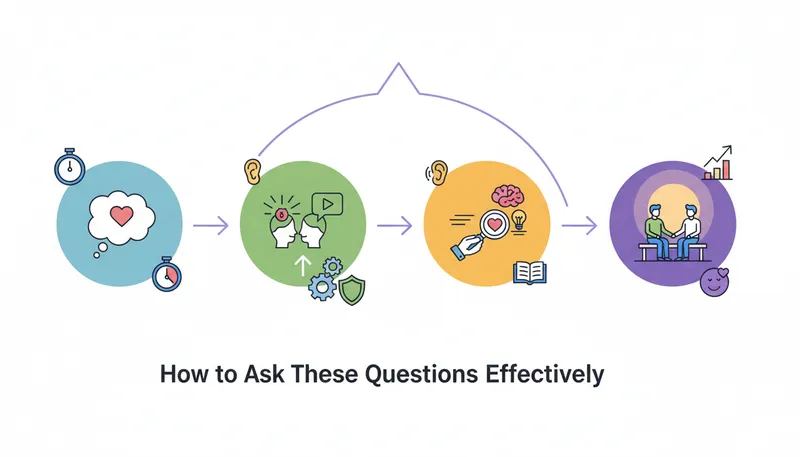
Asking profound questions is only half the battle; the other half is creating an environment where your boyfriend feels comfortable and encouraged to answer honestly. This involves more than just posing the question; it’s about the context, your delivery, and your receptiveness. In our experience, the best conversations unfold organically and with genuine mutual interest. It's not an interrogation, but a shared exploration. Remember, the goal is to deepen your connection, not to pry or judge.
- Choose the Right Time and Place: Avoid asking deep questions when he's stressed, tired, or distracted. Opt for relaxed moments, like during a quiet evening at home, a leisurely walk, or even during a road trip. The setting should feel safe and conducive to open conversation.
- Be Genuinely Curious: Your tone and body language should convey sincere interest. Lean in, maintain eye contact (without staring intensely), and show that you are truly listening. Avoid interrupting or formulating your response while he's still speaking.
- Listen Actively and Empathetically: This is perhaps the most crucial step. Don't just hear the words; try to understand the feelings and perspectives behind them. Reflect what you hear by saying things like, 'So, it sounds like you're saying...' or 'I can understand why that would make you feel...'.
- Share Your Own Thoughts: Relationships are a two-way street. Be willing to answer the same questions yourself or share your own experiences and feelings related to the topic. This creates reciprocity and shows vulnerability on your part, encouraging him to do the same.
- Avoid Judgment and Criticism: Even if his answers surprise you or differ from your own views, respond with understanding and respect. The goal is to learn about him, not to critique his thoughts or feelings. If a topic is sensitive, acknowledge that and proceed with care.
- Don't Force It: If he seems hesitant or uncomfortable with a particular question, don't push. You can acknowledge his feelings and suggest revisiting the topic later or moving on to something else. Respect his boundaries.
- Follow Up: If he shares something significant, follow up on it later. This shows that you were listening and that his words had an impact. For example, if he mentioned a challenge at work, you could ask later, 'How did that situation at work resolve?'
Common Mistakes to Avoid When Asking Relationship Questions
While the intention behind asking questions is positive, there are pitfalls that can unintentionally create distance or discomfort. Being aware of these common mistakes can help you navigate conversations more effectively and build stronger connections. In our observation of couples, these missteps often stem from a misunderstanding of how to foster healthy communication.
- Treating it like an Interrogation: Piling on question after question without giving him space to breathe or share spontaneously can feel like an interrogation, not a conversation. Ensure there's a natural flow and pause for his responses.
- Making it a Competition or Comparison: Avoid framing questions in a way that invites comparison to yourself, others, or past relationships. For instance, instead of 'Why didn't you do X like my ex?', ask 'What was your thought process behind that decision?'
- Being Judgmental or Critical: If he expresses an opinion or feeling that you disagree with, resist the urge to immediately correct or criticize. This will shut down future openness. Focus on understanding his perspective first.
- Asking Questions When He's Not Receptive: As mentioned, timing is crucial. Pushing for deep answers when he's clearly preoccupied or tired will likely lead to short, unhelpful responses or defensiveness.
- Not Listening Actively: This is a cardinal sin. If you're busy scrolling on your phone, thinking about what you'll say next, or not making eye contact, you're not truly listening. He'll pick up on this lack of engagement.
- Asking Leading or Biased Questions: Frame questions neutrally. Instead of 'Don't you think that was a bad idea?', try 'What were your thoughts on that approach?' This allows him to share his reasoning without feeling pressured.
- Expecting Instant Deep Answers for Sensitive Topics: Some topics require time and a foundation of trust. Don't expect profound revelations on highly sensitive issues on the first try. Build up to them gradually.
- Forgetting to Share Yourself: If you're only asking questions and never offering your own thoughts, feelings, or experiences, the conversation can feel one-sided and transactional. Reciprocity is key.
Leveraging Technology for Deeper Conversations

In today's fast-paced world, maintaining deep, meaningful conversations can be challenging. Technology, when used thoughtfully, can actually enhance connection rather than hinder it. Tools designed to facilitate relationship communication can provide structure and prompts that encourage partners to engage in the kinds of discussions that strengthen their bond. In our development of FEELT, we've seen firsthand how intentional digital tools can bridge the gap created by busy schedules.
Consider the role of a relationship check-in app like FEELT. It's not about replacing face-to-face conversations, but about complementing them. The app offers guided prompts for emotional check-ins, relationship reflections, and future planning, which can be particularly helpful when you're not sure where to start or when life gets overwhelming. For instance, instead of struggling to initiate a conversation about your day, a prompt like 'What was the most challenging part of your day and how did you navigate it?' can be a gentle entry point. This is supported by research; a 2026 study in the Journal of Couples Technology found that couples using relationship apps reported increased communication frequency and satisfaction.

- Structured Prompts: Apps provide curated questions that cover a range of topics, from daily check-ins to deeper reflections on values and future goals. This takes the pressure off of coming up with questions on the spot.
- Emotional Check-ins: Features that allow partners to share their mood and connection levels can foster empathy and understanding, even when physical presence isn't possible. The AI Therapist within FEELT can even summarize these check-ins and offer personalized insights.
- Shared Goals and Rituals: Many apps help couples set and track shared goals or establish communication rituals, making consistent connection a habit.
- Private and Secure Space: These platforms offer a private, dedicated space for intimate conversations, ensuring that your discussions remain between you and your partner.
- Progress Tracking: Some apps, like FEELT, offer ways to track relationship growth and celebrate milestones, reinforcing positive communication patterns.
The key is to use these tools as a catalyst for conversation, not a substitute. The insights gained from an app can then be a springboard for richer, more in-depth discussions when you're together. For example, if an app prompts a question about fears, and your boyfriend shares a significant one, you can then dedicate time to discuss it further in person. This blend of digital support and real-world interaction is increasingly proving to be a powerful way to nurture relationships.
FAQ: Your Questions About Relationship Questions Answered

How often should I ask my boyfriend deep questions?
There's no strict rule, but aiming for regular, meaningful conversations is key. Integrating deep questions into daily or weekly check-ins, perhaps using a relationship app like FEELT, can ensure consistent connection. The frequency should feel natural and supportive, not forced or like an interrogation. Focus on quality over quantity.
What if my boyfriend is hesitant to answer deep questions?
If he's hesitant, it's important to respect his boundaries and not push. Reassure him that your intention is to understand him better, not to pry. You can try asking softer, more playful questions first, or suggest using a tool like FEELT which offers structured, private prompts. Building trust takes time.
How can I ensure the conversation doesn't become an argument?
Focus on active listening, empathy, and non-judgment. Frame questions neutrally and be prepared to share your own perspectives openly. If disagreements arise, acknowledge them calmly and focus on understanding each other's viewpoints rather than trying to 'win' the discussion. Tools like FEELT can help maintain a positive and constructive tone.
What's the difference between relationship questions and interview questions?
Relationship questions are about fostering connection, understanding, and intimacy. They're open-ended, empathetic, and focus on feelings and perspectives. Interview questions are typically goal-oriented, seeking specific information for a decision (like hiring). The intent and delivery are vastly different.
Can asking too many questions push my boyfriend away?
Yes, if the questions feel like an interrogation, are judgmental, or are asked at inappropriate times. The key is balance, genuine curiosity, active listening, and creating a safe space. Using a relationship app like FEELT can help provide structured, non-intrusive prompts that can actually draw partners closer.
Should I ask my boyfriend about his past relationships?
It's a sensitive topic. If you do, approach it with curiosity and a desire to understand lessons learned, not to compare or create insecurity. Focus on what he learned about himself and what he values in a partnership now. Timing and tone are critical. A relationship app might offer safer ways to explore past influences indirectly.
Conclusion: Building a Stronger Bond Through Dialogue
In essence, the art of asking insightful questions to your boyfriend is a continuous journey of discovery and connection. By delving into his past, present, future, values, and even his playful side, you create a richer tapestry of understanding that strengthens your bond. Remember that the most powerful conversations are built on a foundation of genuine curiosity, active listening, and a commitment to creating a safe space for vulnerability. These aren't just questions; they are invitations to deeper intimacy.
Start your journey of deeper connection by exploring these questions and opening up new avenues of understanding with your boyfriend. Remember, consistent communication and genuine curiosity are the cornerstones of a thriving relationship.
Next Steps:
- Start by choosing a few questions from this list that resonate with you and feel appropriate for your current relationship stage.
- Schedule a relaxed time to have a conversation, free from distractions.
- Consider exploring a relationship check-in app like FEELT to integrate structured prompts into your daily or weekly connection rituals.
- Practice active listening and share your own thoughts and feelings to foster a balanced exchange.
- Be patient and consistent; building a deeply connected relationship is an ongoing process.
Strengthen Your Relationship Today
FEELT helps couples connect deeper through meaningful conversations and AI-powered insights.
Download FEELT Free